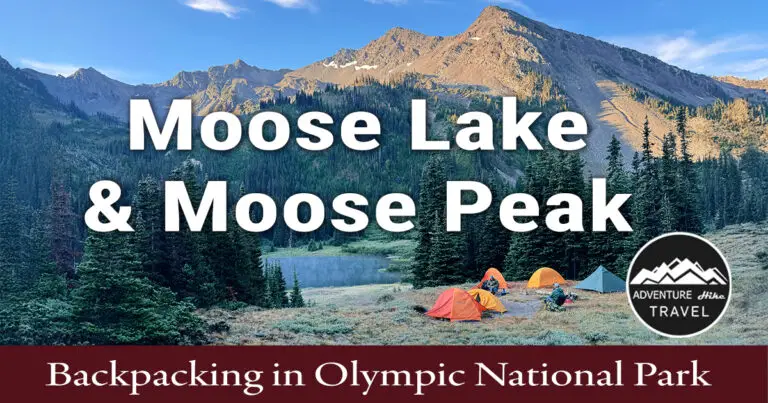
Moose Lake and Moose Peak | Backpacking in Olympic National Park
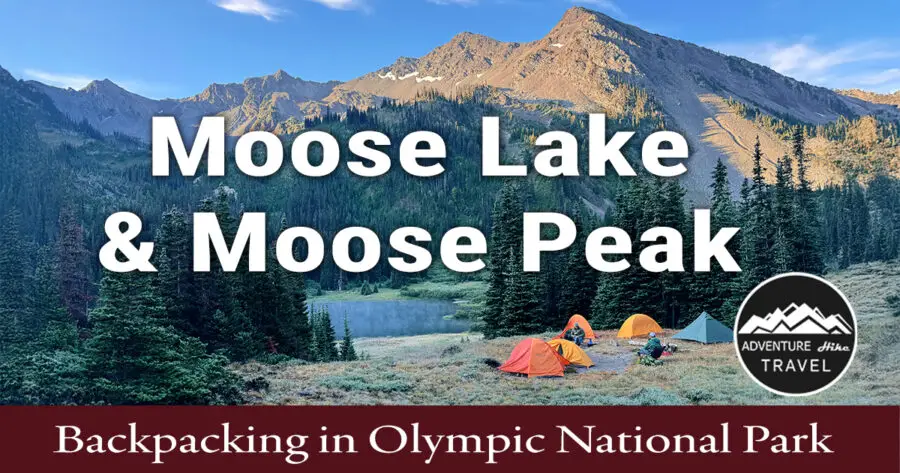
If you’re looking for a stunning backcountry adventure in Olympic National Park, the Moose Lake & Moose Peak backpacking loop should be at the top of your list. This trail blends scenic ridgeline walks, fun rock scrambles, and striking turquoise alpine lakes—so unbelievably gorgeous that your friends might think your photos are AI-generated. Along the way, you’ll be treated to sweeping views of jagged peaks in the Bailey Range, distant Mount Olympus, and expansive valleys, with the chance to spot deer, marmots, and other wildlife.
Whether you’re planning a challenging overnight or a long day hike, this route has a little bit of everything: rugged climbs, serene lake views, and breathtaking ridgeline panoramas stretching across Grand Valley and Lillian Ridge.

 Moose Lake & Moose Peak Trail Overview
-
Trail Name: Moose Lake & Moose Peak
-
Location: Olympic National Park, WA
-
Distance: ~9.5 miles round trip (backpacking route via Moose Peak)
- Distance: if only doing Moose Lake 8.2 miles, roundtrip
-
Elevation Gain: ~2,500 ft
-
Difficulty: Hard
-
Pass Required: Day Pass, Olympic National Park Pass or America the Beautiful Pass
-
Dogs: Not allowed
-
Backpacking: Yes, at established campsites
-
Camping Permits: Required (available on Recreation.gov)
- Best Season: July through mid-October
-
Maximum Party Size: 12
-
Trailhead: Obstruction Point Road (off Hurricane Ridge Road)
-
Region: Olympic Peninsula > Northern Coast
-
Toliet: Toilet at the trailhead, Pit toilet at Moose Lake
-
Cell Service: None
Travel Info:
Distance from Seattle: 3hr 30min
Getting to the Trailhead
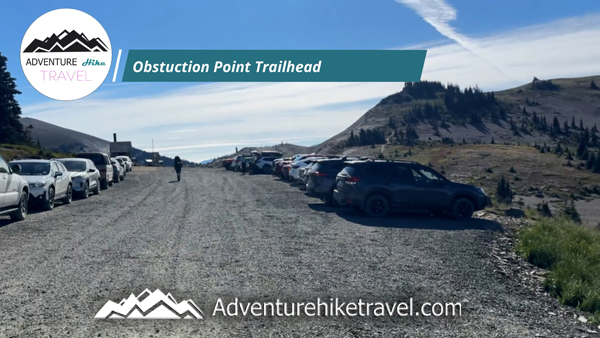
The adventure starts at the end of Obstruction Point Road, a narrow gravel road that splits off just before the Hurricane Ridge parking lot. The road gains elevation quickly, so be prepared for a winding drive with gorgeous ridge views along the way. This road was super bumpy; you may want to shift to a lower gear or lock into 4-wheel drive for this road. You definitely do not want to slide off this road.
Parking and Passes
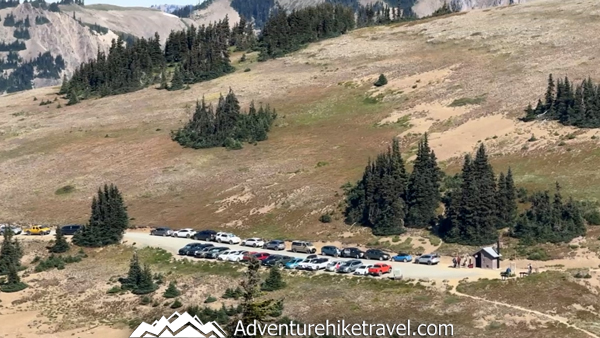
Parking at the end of Obstruction Point Road is pretty limited, so it’s best to get there early, especially on weekends. When you enter Olympic National Park at the bottom of the road heading up toward Hurricane Ridge, you’ll stop at a pay kiosk with a ranger in the booth where you can grab a day pass, America the Beautiful Pass, or an Olympic National Park Pass if you don’t already have one.
Day 1 – Moose Peak to Moose Lake
We hit the trail at 9:43 AM on July 26, 2025, stepping out of the Obstruction Point parking lot under sunny skies and a light alpine breeze. The trailhead itself sits high at 6,150 feet, so you’re rewarded with big views almost immediately.
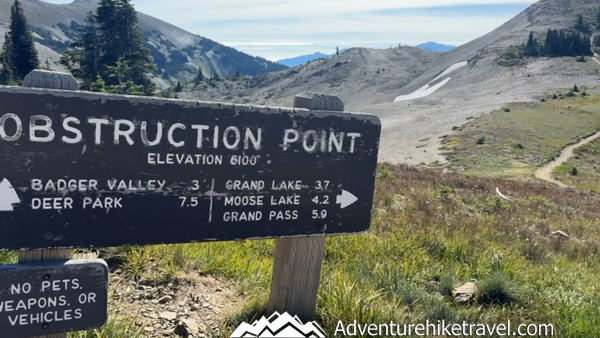
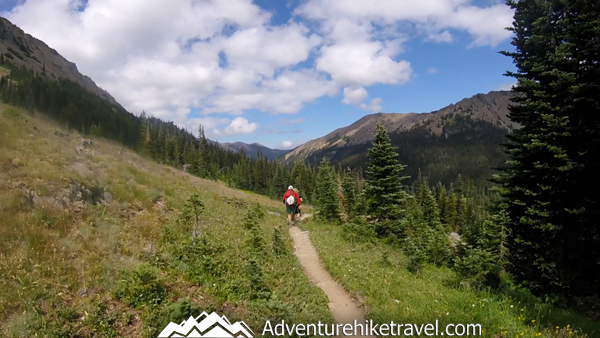
From the parking lot, the trail splits in two. The route to the left heads toward Deer Park, but we turned right, climbing onto Lillian Ridge and setting our sights on Grand Lake, Moose Lake, and Grand Pass. From the very start, the trail feels open with sweeping alpine views that almost make you feel like you stepped into Rohan from The Lord of the Rings.
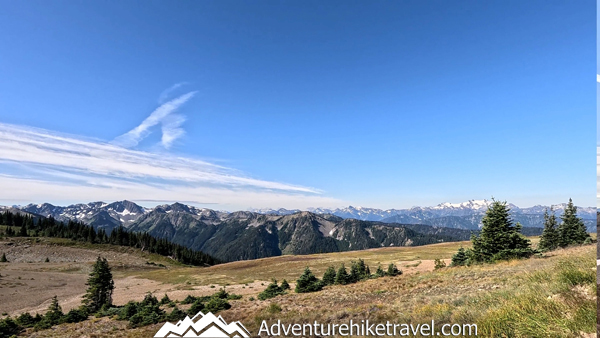
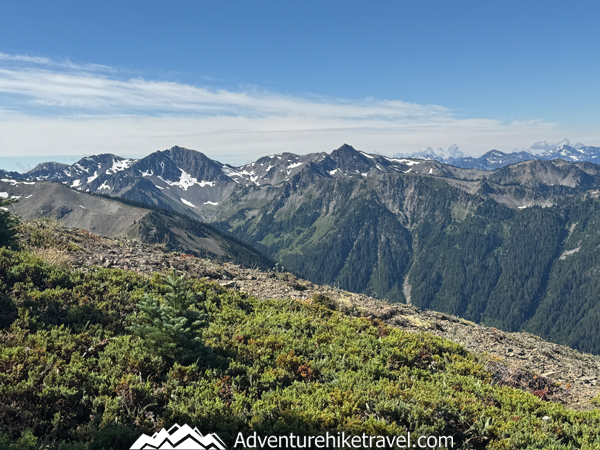
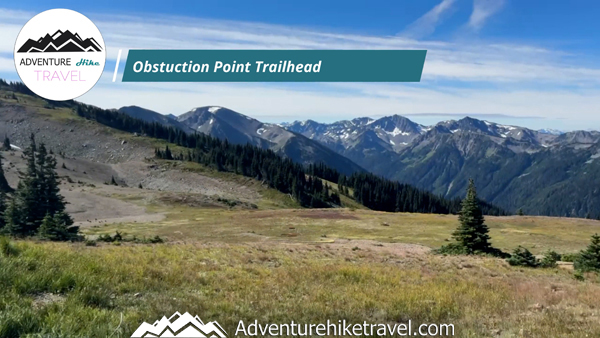
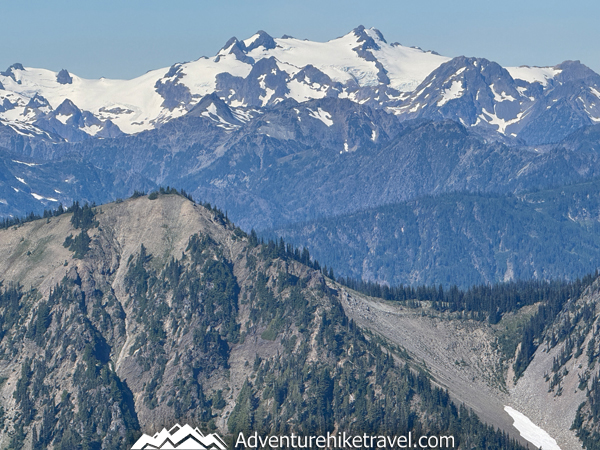
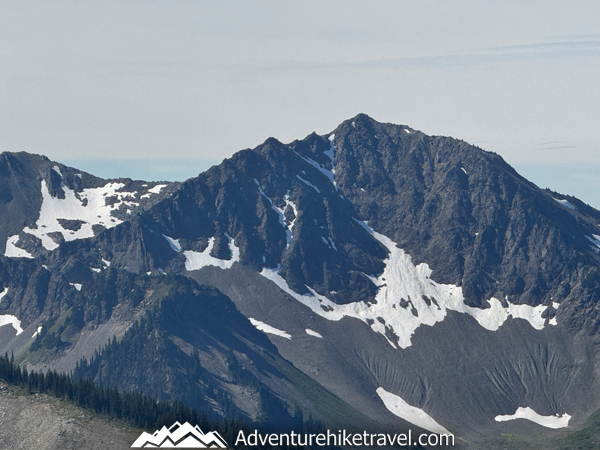
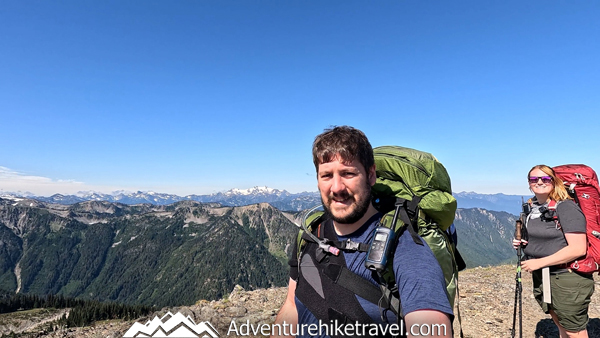
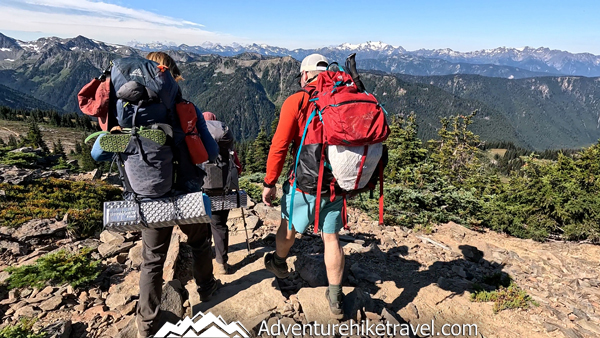
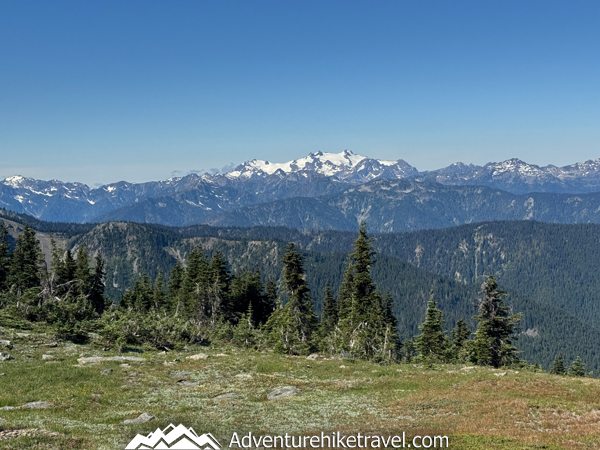
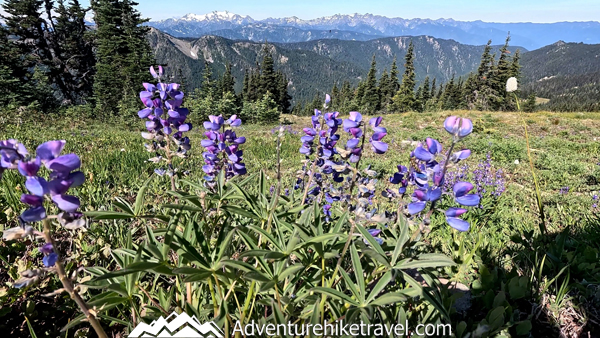
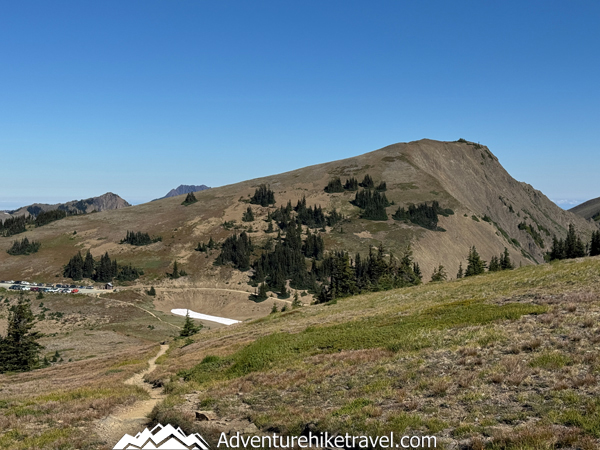
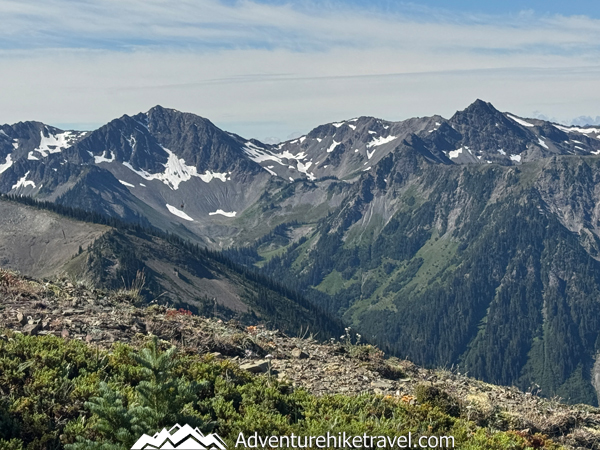
Lillian Ridge is an absolutely stunning way to kick off a backpacking trip. This opening stretch of trail feels deceptively easy, rolling gently up and down through wide-open alpine meadows dotted with wildflowers swaying in the breeze. From the very first steps, the views are unreal—sweeping panoramas of the Olympic Mountains unfold around you, with Mount Olympus rising dramatically in the distance.
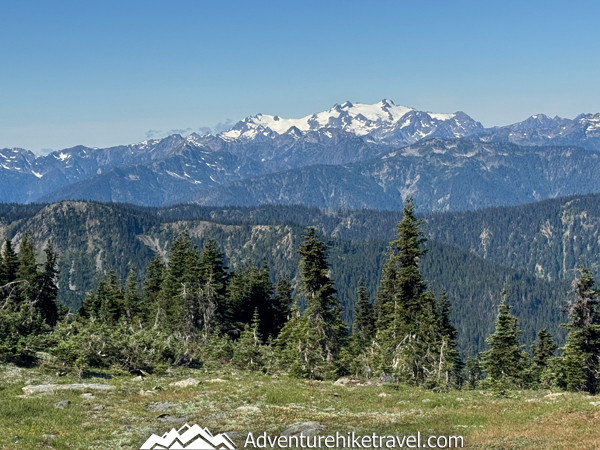
Honestly, this grassy alpine ridgeline alone is worth the hike. The scenery is nonstop, expansive, and jaw-droppingly beautiful, making it one of those places where you have to keep stopping just to take it all in.
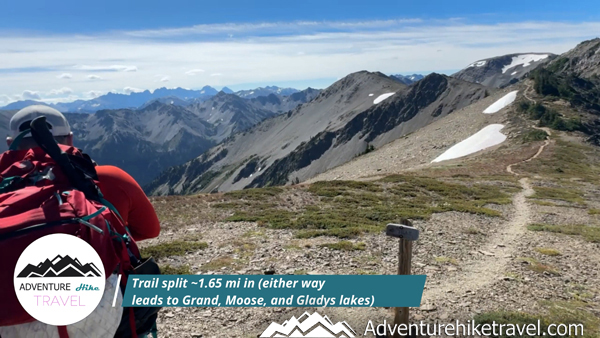
You’ll know you’re in the right spot when you come across this TRAIL sign. About 1.65 miles in, the trail splits right in front of it. If you want the easier option to Moose Lake and back, follow the arrow pointing to the main trail. If youwant to summit Moose Peak and loop around to Moose Lake from the back side, keep going past the sign and take the smaller footpath heading toward Moose Peak.
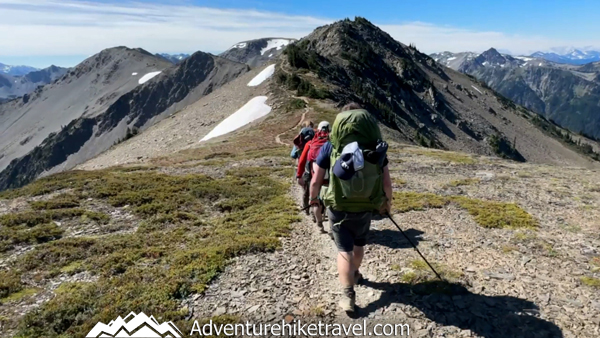
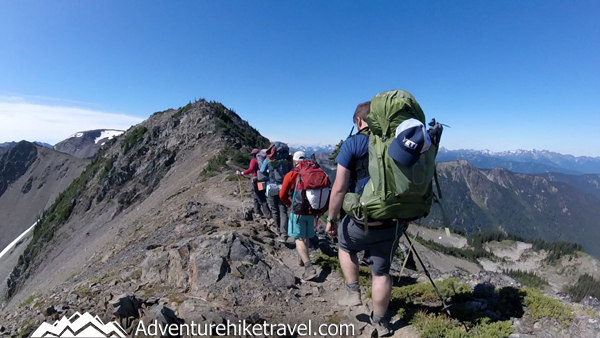
This is the route we took, continuing past the trail sign and leaving the main trail to follow the smaller footpath toward Moose Peak.
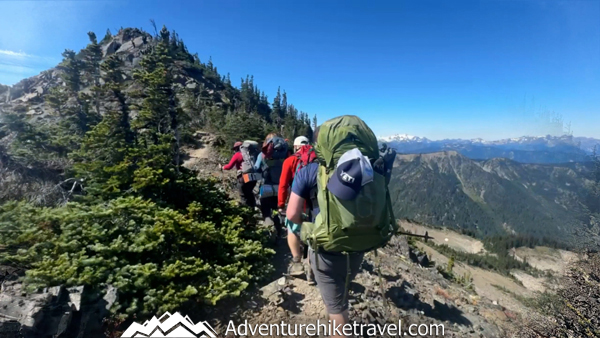
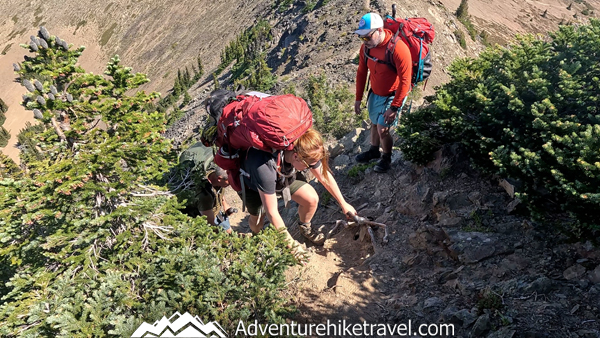
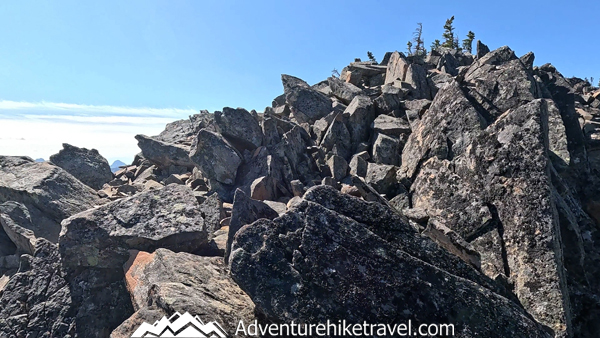
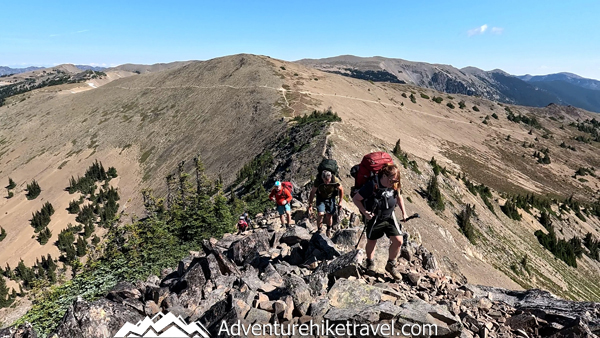
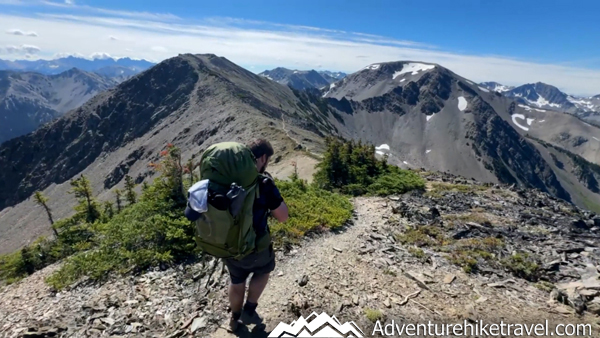
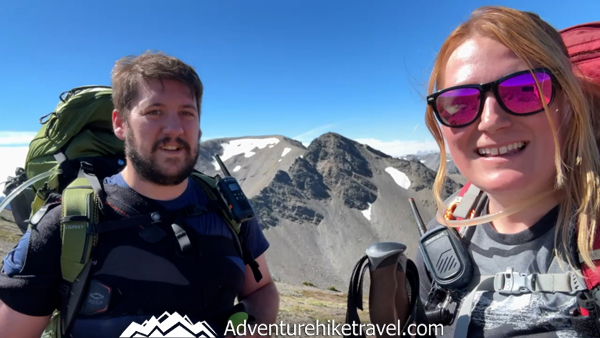
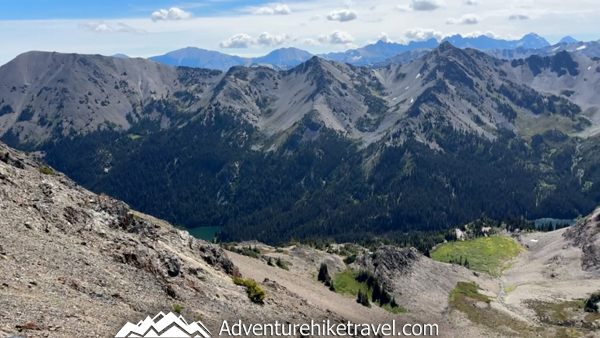
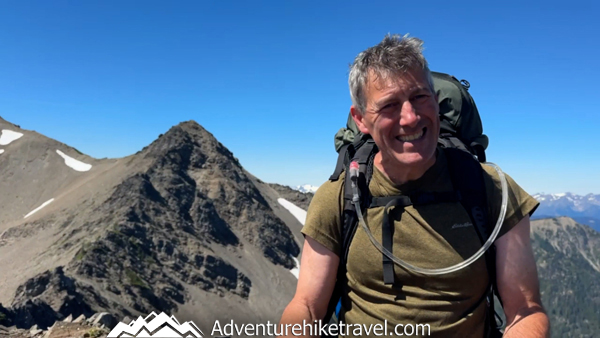
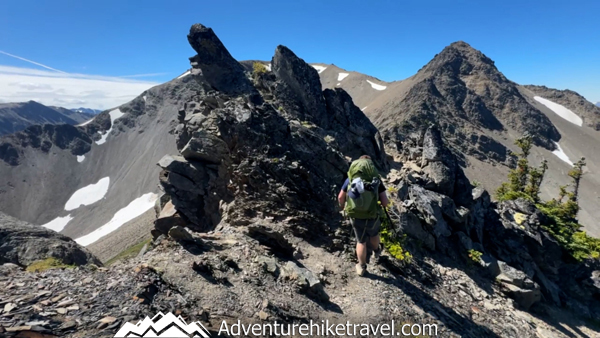
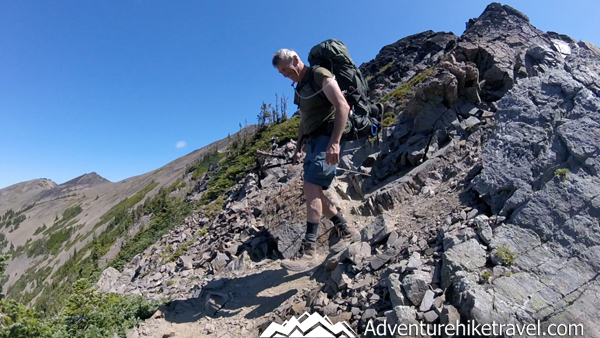
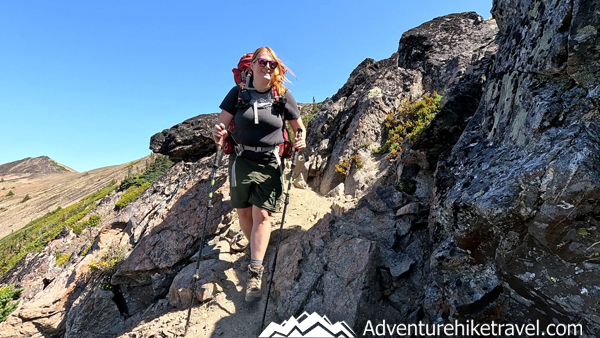
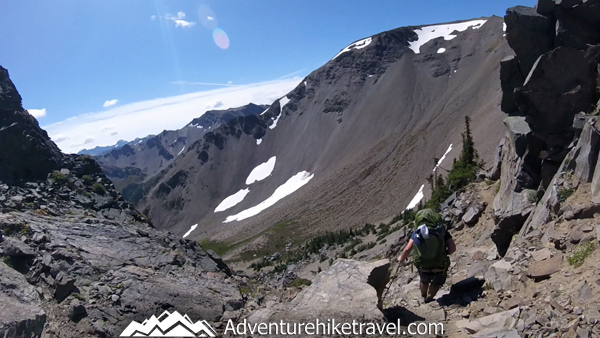
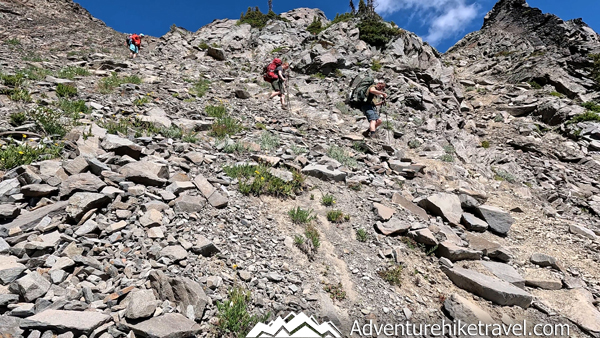
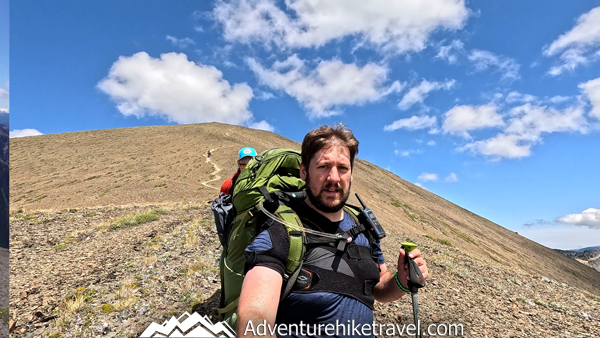
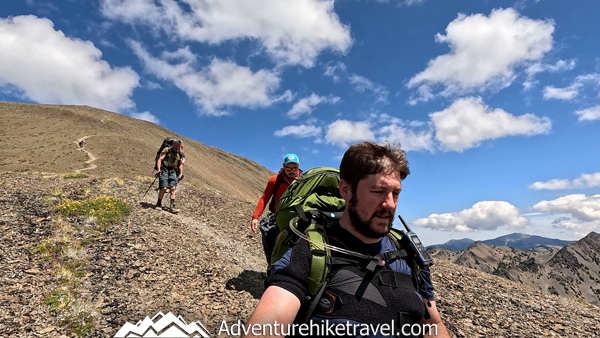
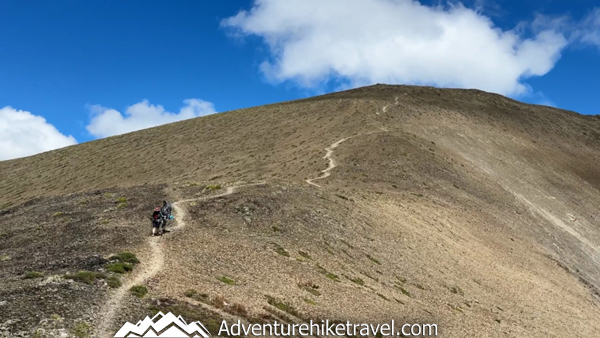
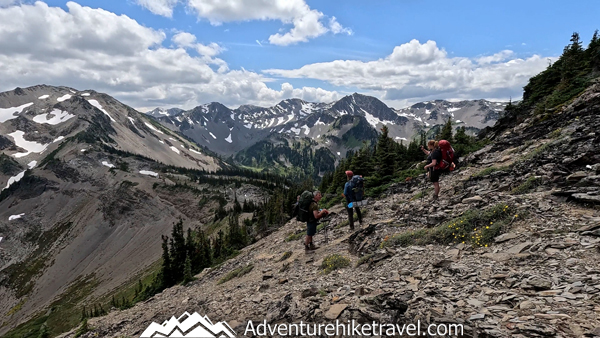
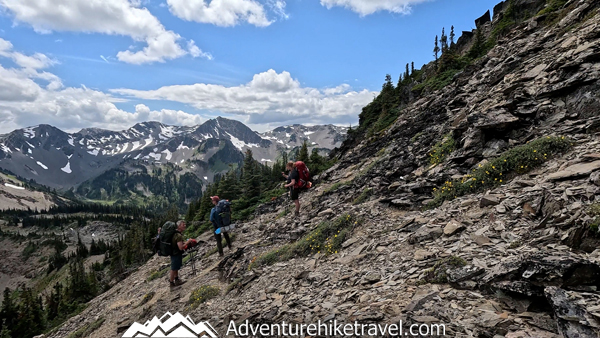
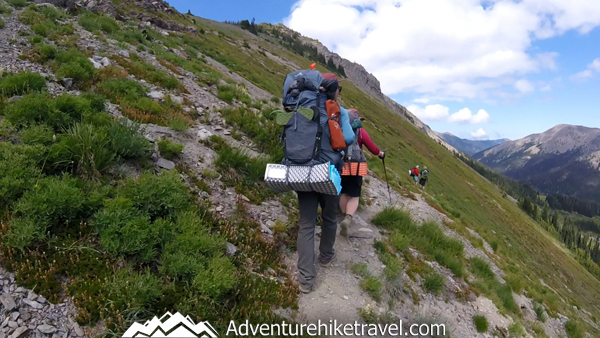
From here, the easy part of the hike is officially over, and the real climb begins. The trail turns into a scrambly mix of loose rock and narrow rocky ledges, and it stays that way for the next half mile or so as you work your way upward.
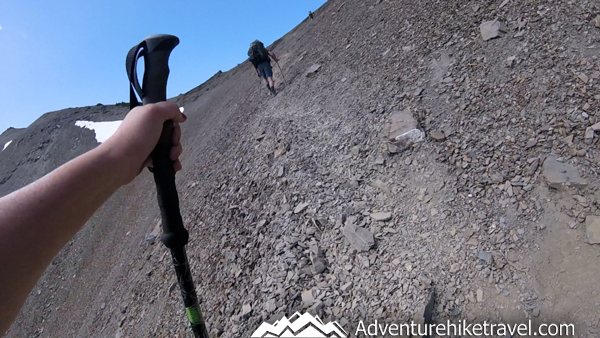
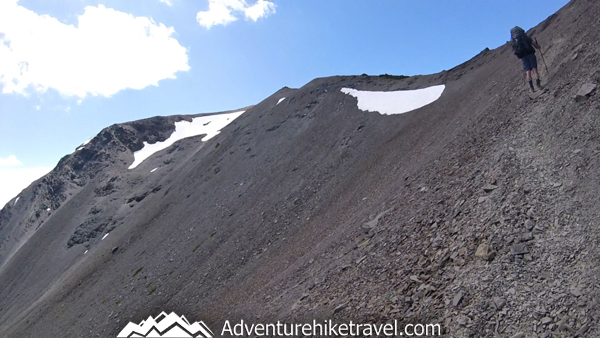
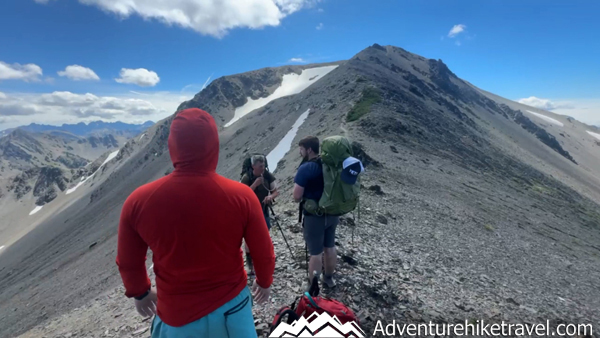
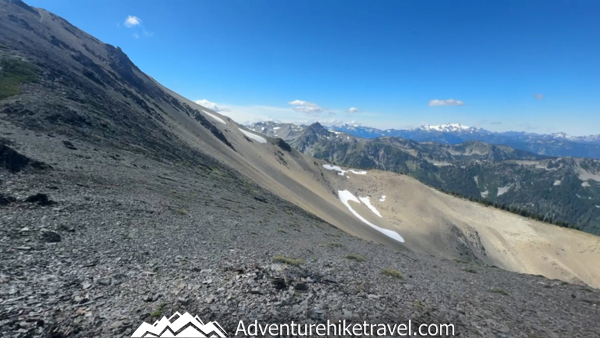
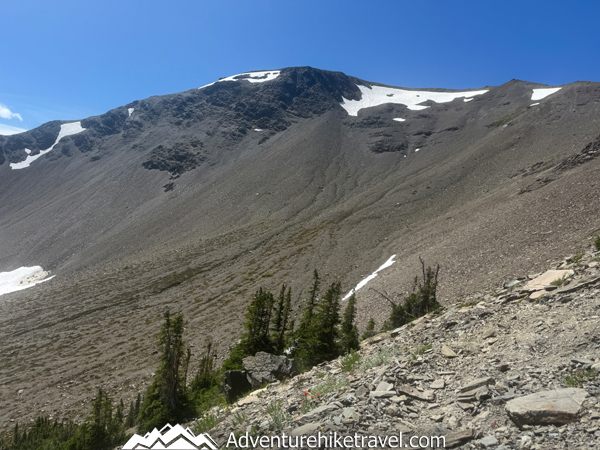
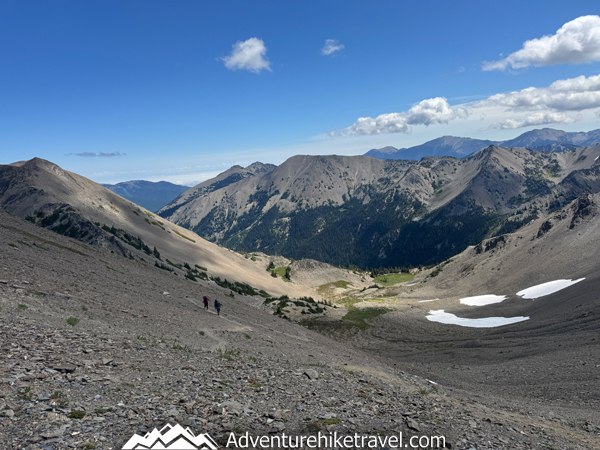
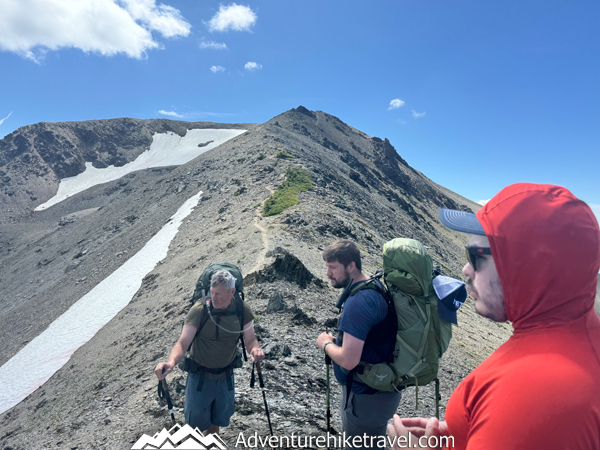
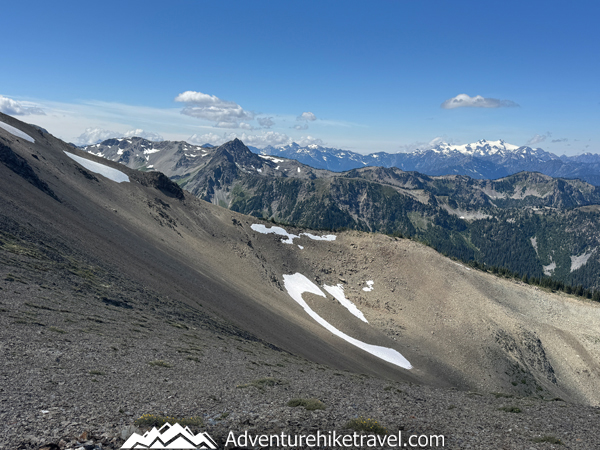
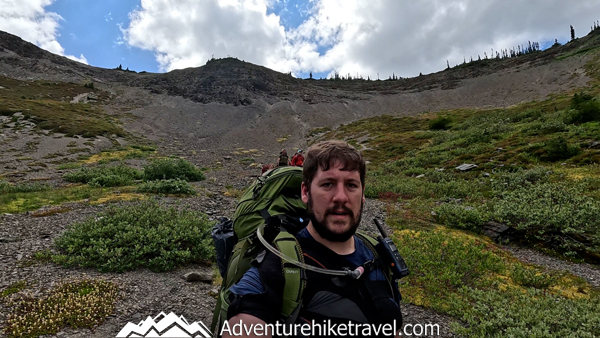
This next section is a lot of loose scree, with small rocks sliding around under every step, and it’s a total calf burner. This is where you gain the most elevation on day one as you grind your way up toward Moose Peak.
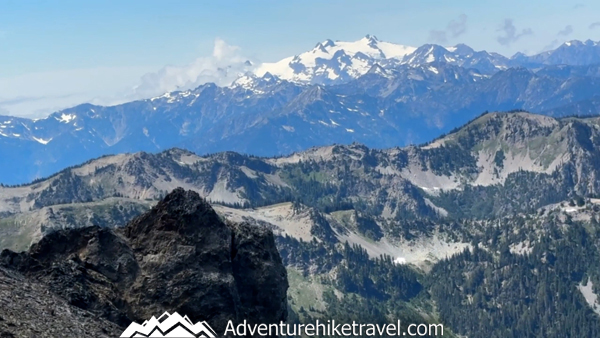
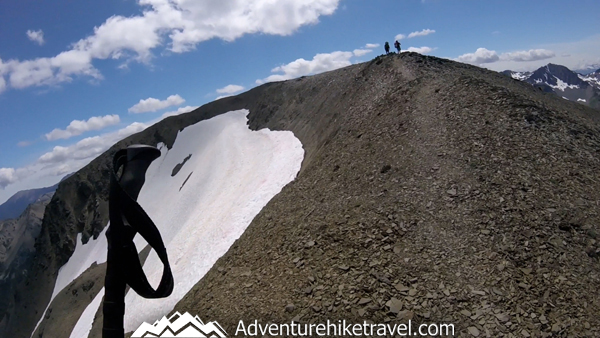
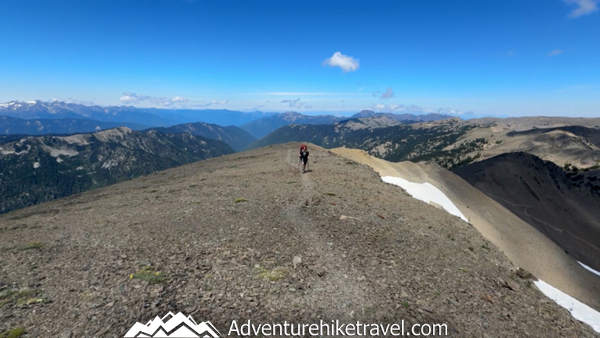
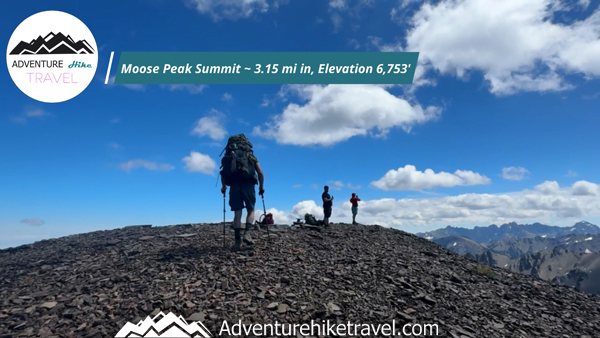
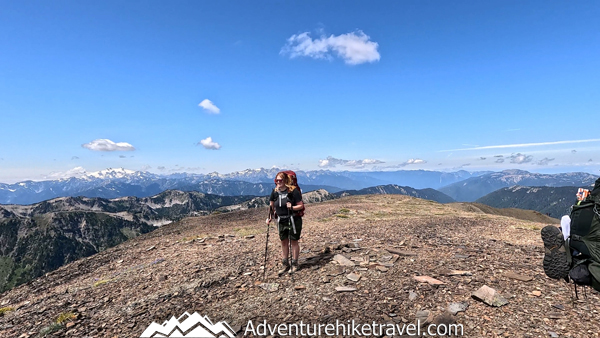
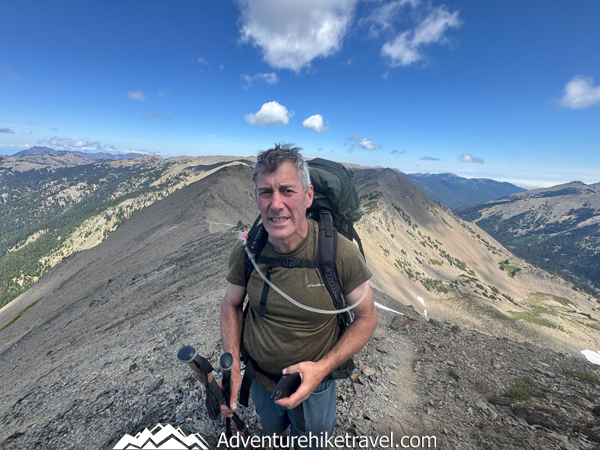
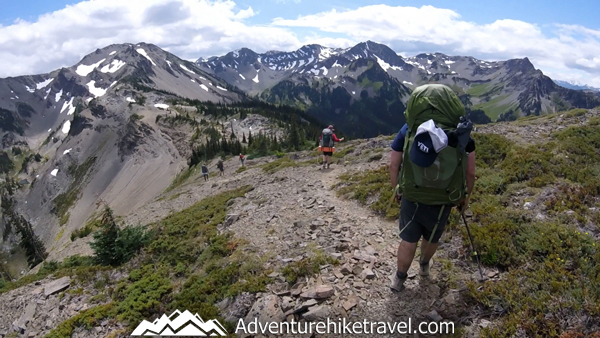
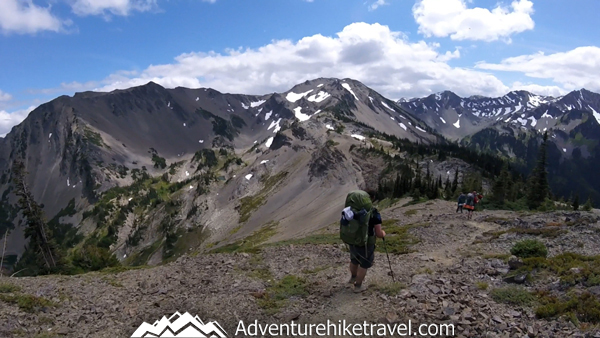
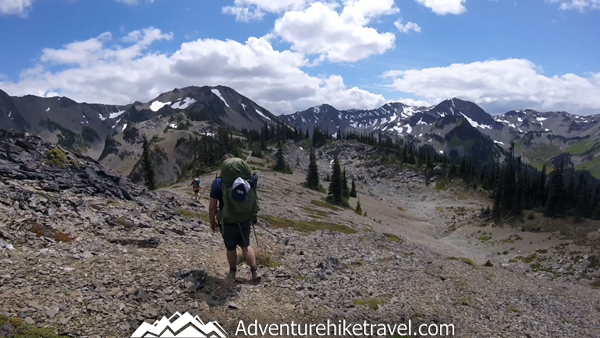
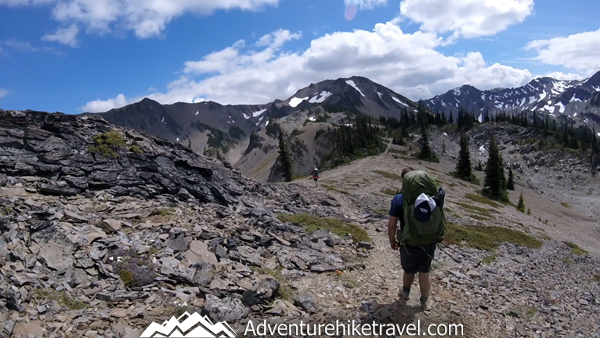
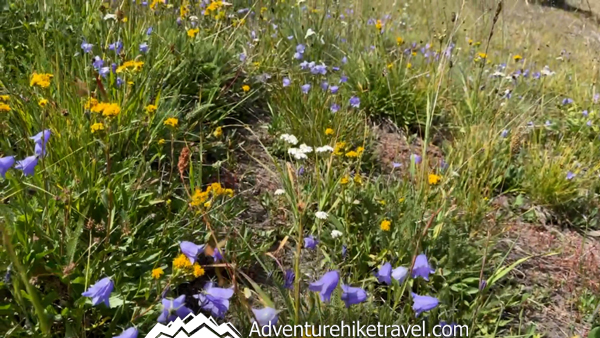
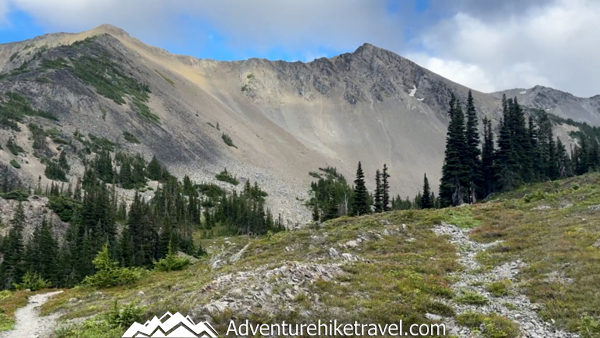
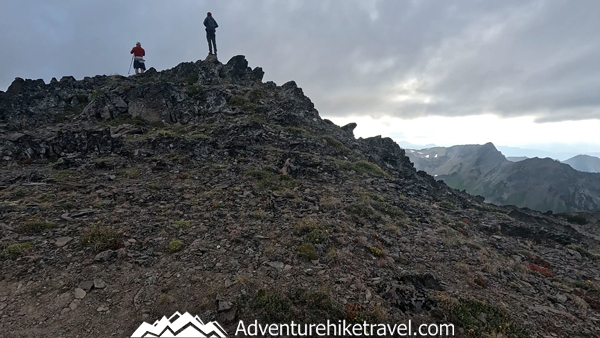
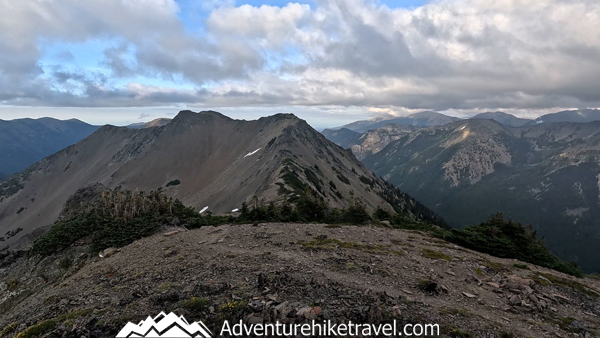
After pushing through the steep, calf-burning talus climb, the trail finally eases up and turns into a beautiful ridgeline walk toward the summit of Moose Peak. The terrain is mostly rocky, but it’s a much more gradual stroll compared to the climb below. Every so often, you’ll spot pops of purple and yellow wildflowers growing right out of the rocks, which is pretty cool considering how rugged the landscape is.
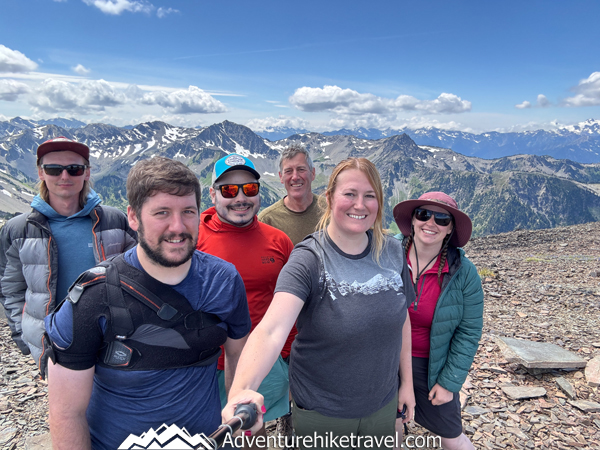
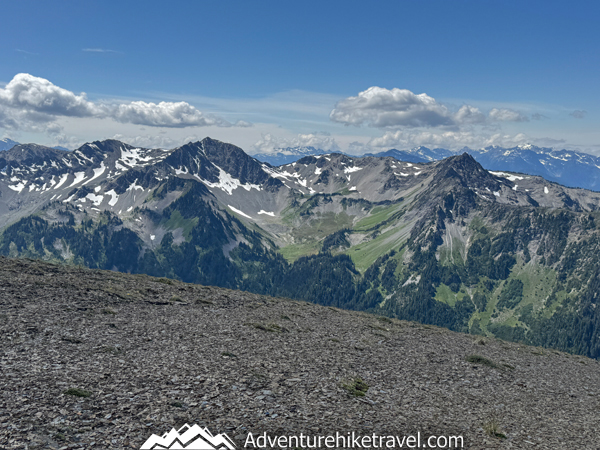
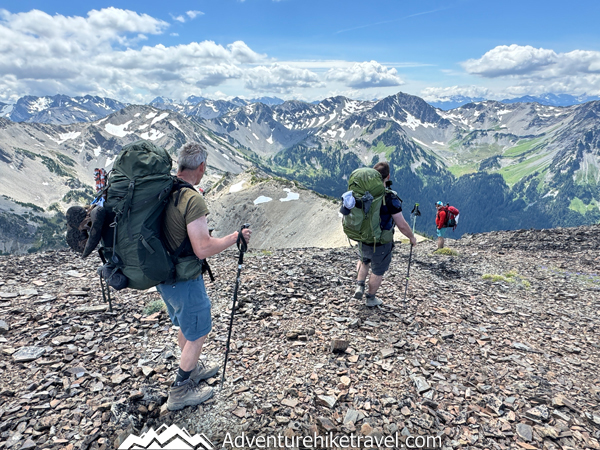
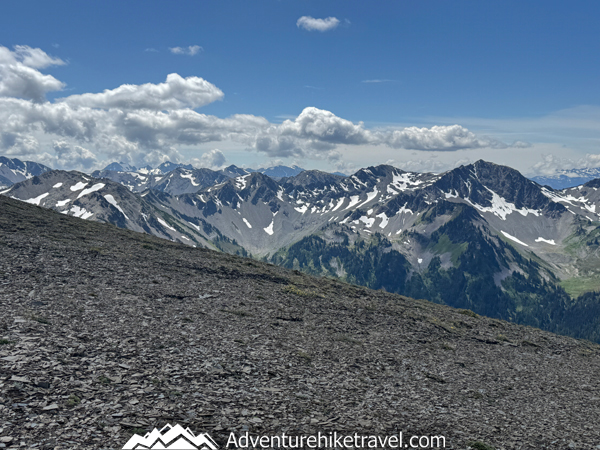
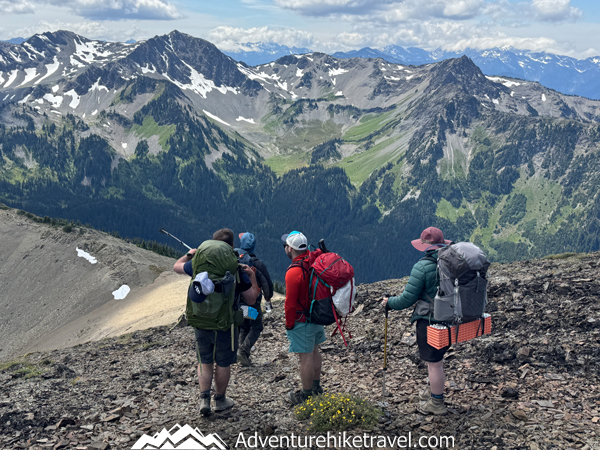
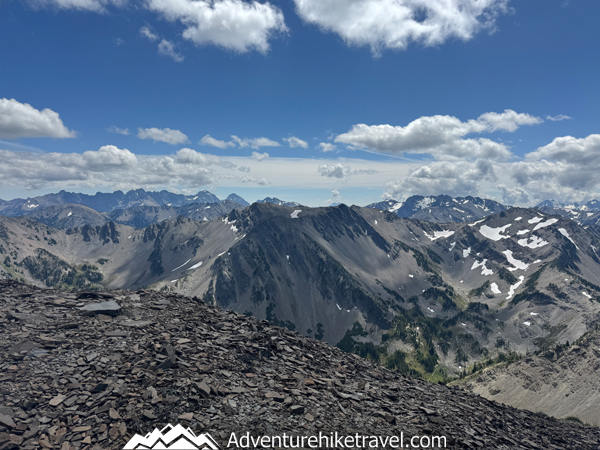
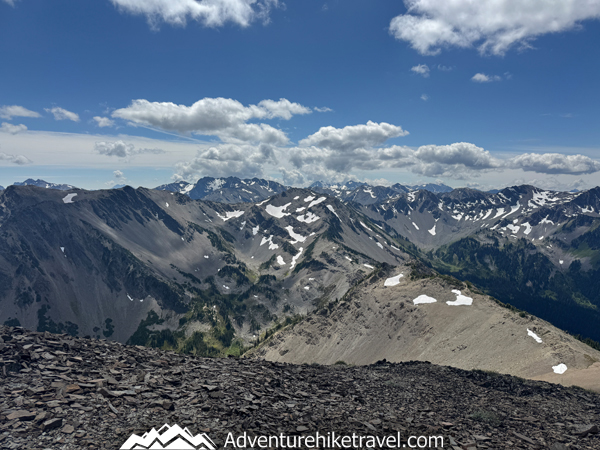
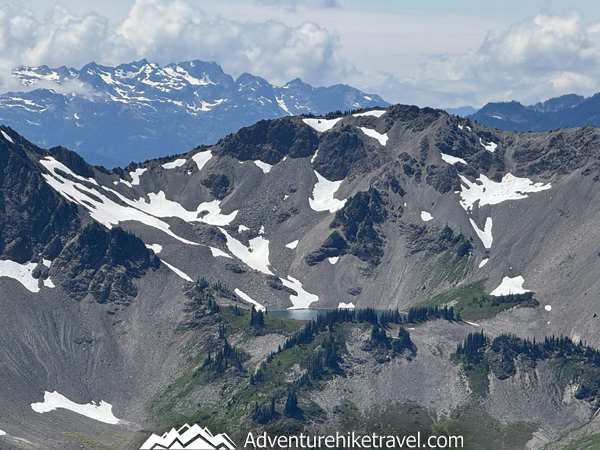
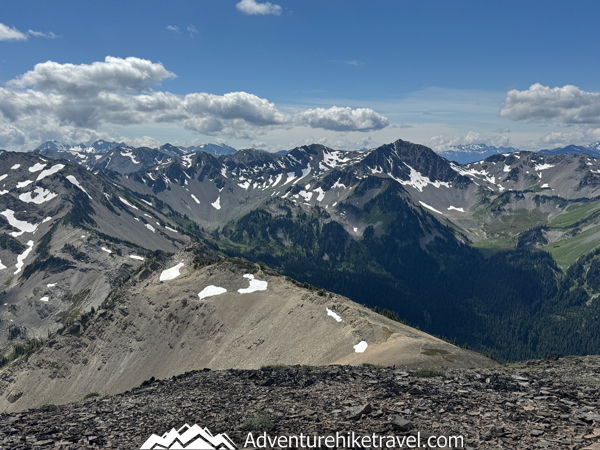
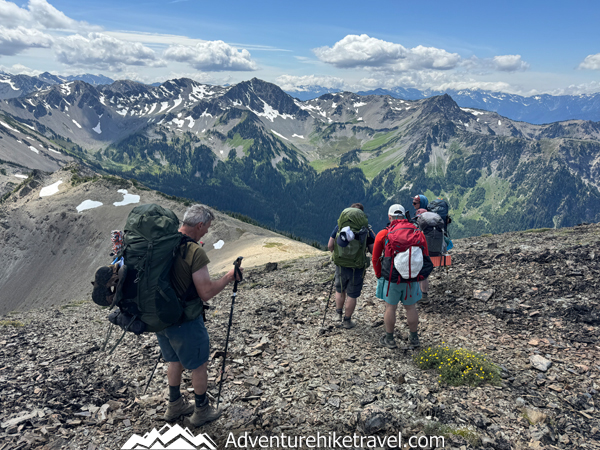
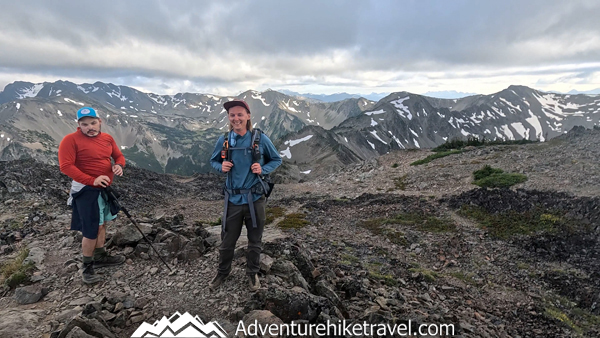
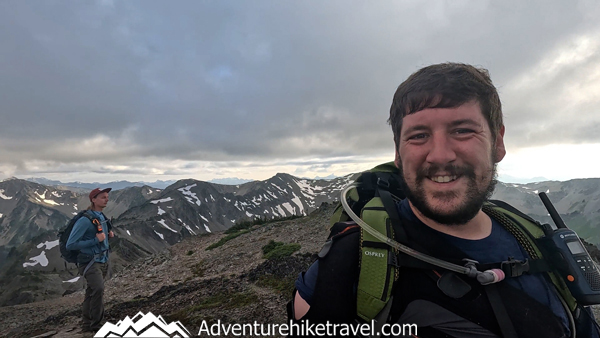
The summit of Moose Peak is the perfect spot to stop, drop your pack, and enjoy a well-earned snack or squished sandwich. The views up here are so unreal that, honestly, people back home might think your photos and videos are AI-generated. It’s one of those is this even real life? kind of places.
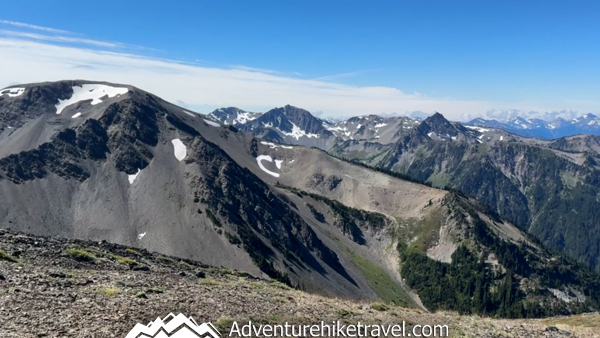
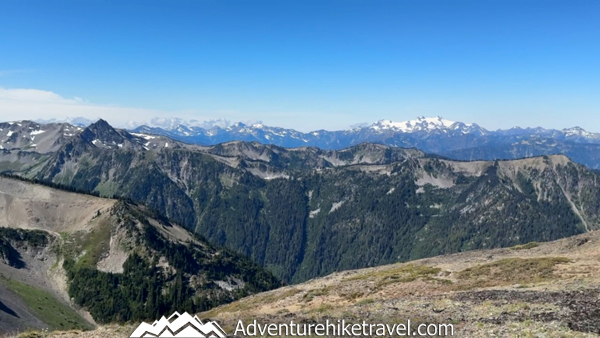
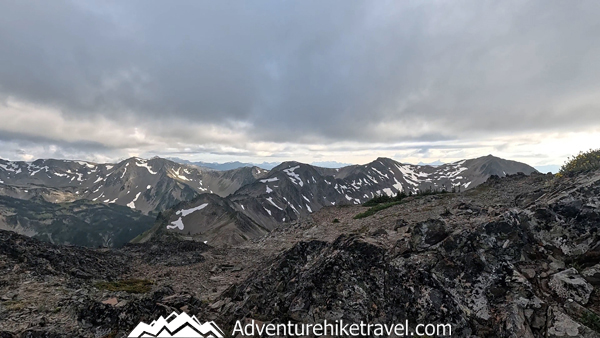
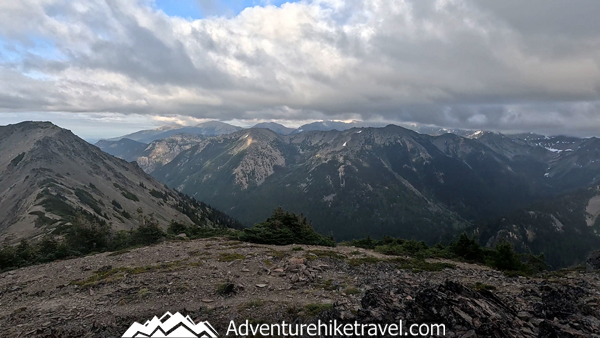
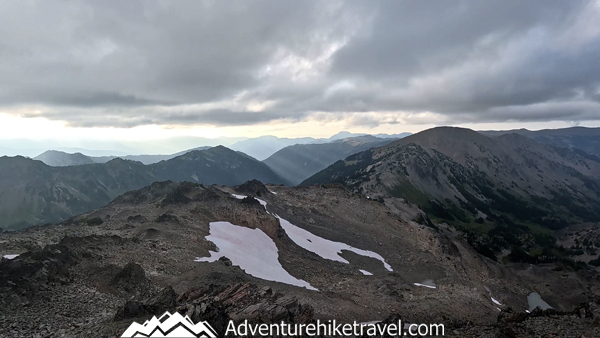
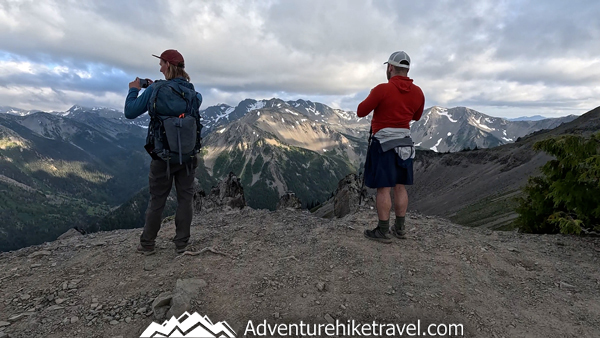
From the top, you’re treated to full 360-degree views with mountains stretching in every direction. On a clear day, the Olympic Mountains completely surround you, creating a dramatic, layered skyline that never seems to end.
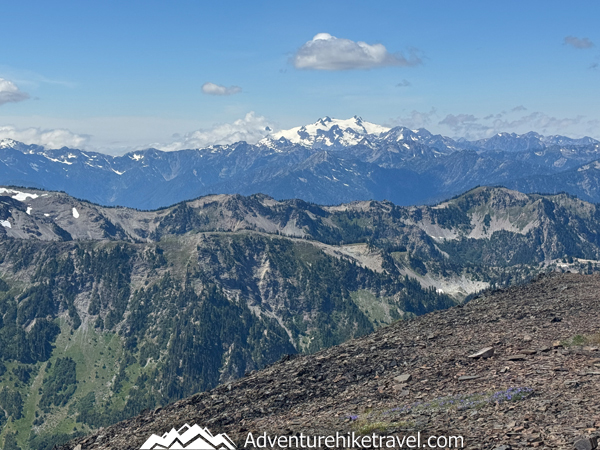
Some of the standout peaks you can spot from the summit include Mount Olympus, easily recognizable as the tallest peak in the park, along with Mount Catherine, and other peaks in the rugged Bailey Range. I could also identify McCartney Peak, Mount Anderson, Mount Deception, and Mount Mystery, among the endless ridgelines and valleys rolling off into the distance.
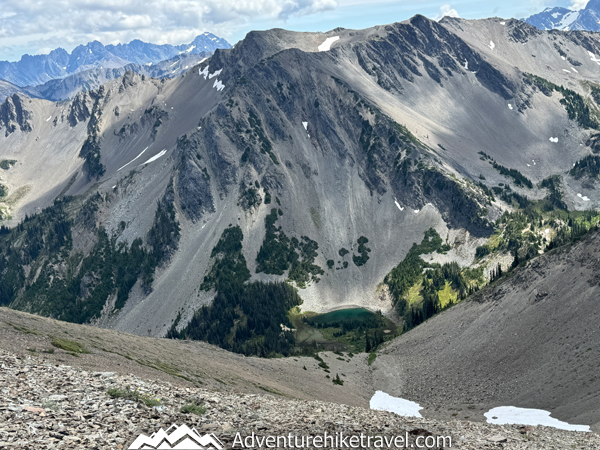
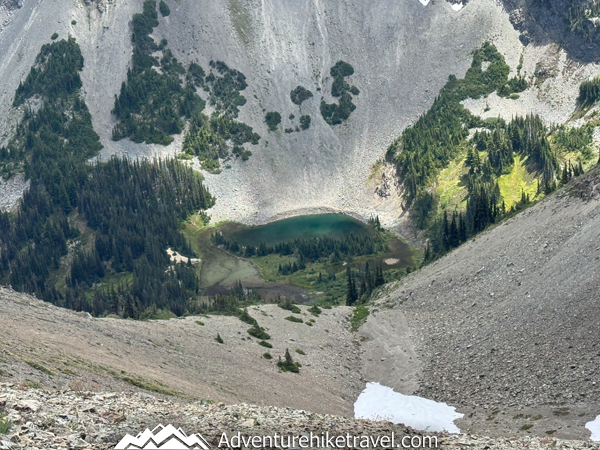
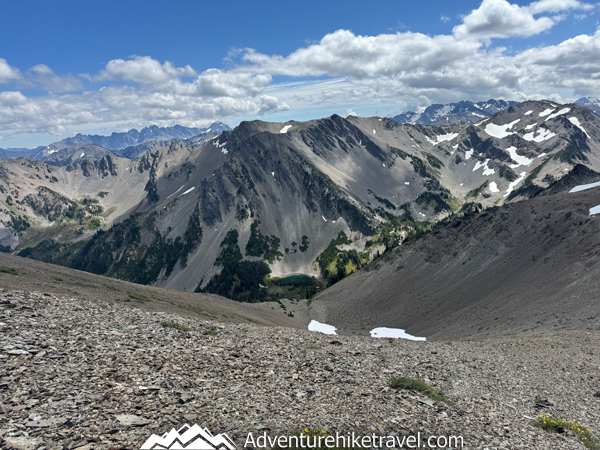
Below you, Grand Valley opens up with alpine basins and lakes tucked into the landscape. Moose Peak is an absolutely jaw-dropping viewpoint in Olympic National Park.
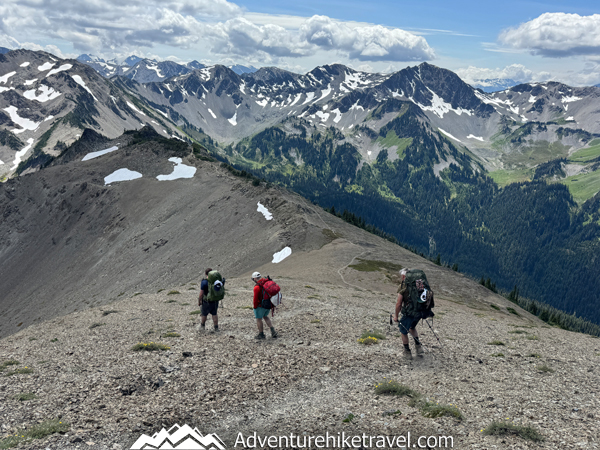
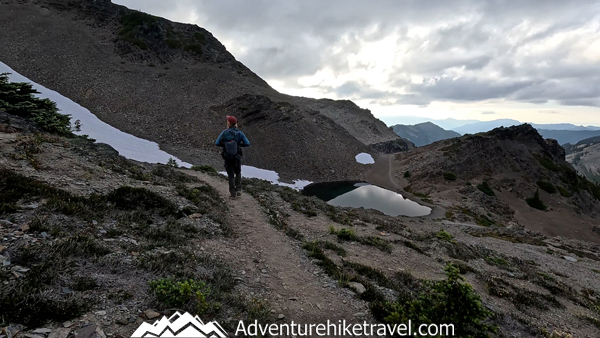
Descending from the summit of Moose Peak, the route drops back down below Lillian Ridge, losing about 2,145 feet of elevation on the way. The descent starts along a beautiful rocky ridgeline, with plenty of talus underfoot and wide-open views stretching out across both sides of the ridge.
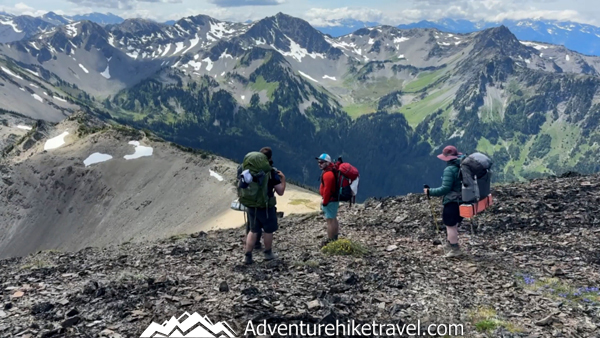
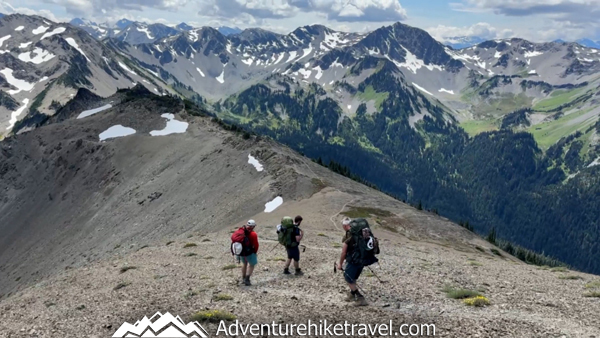
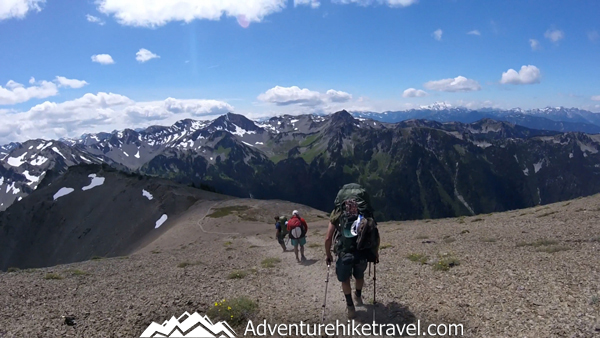
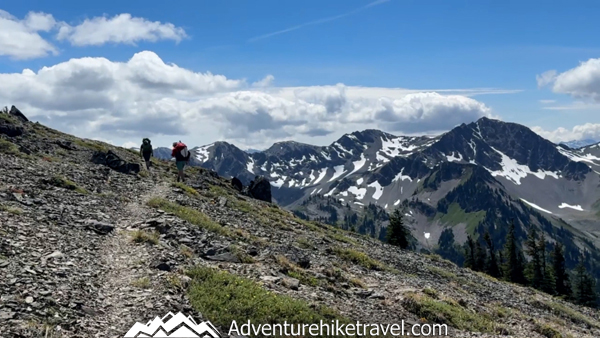
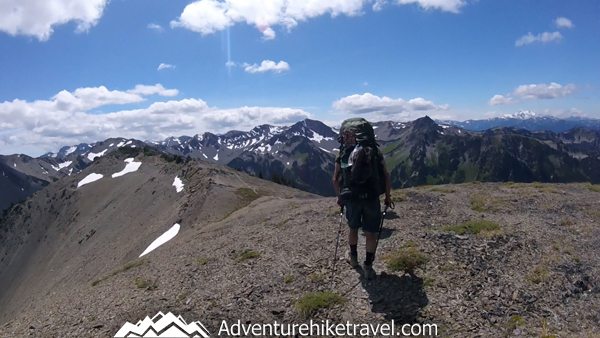
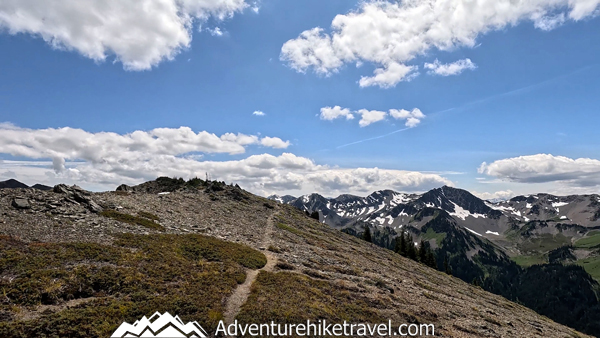
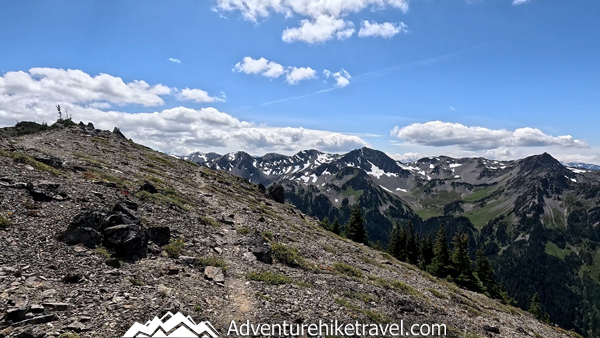
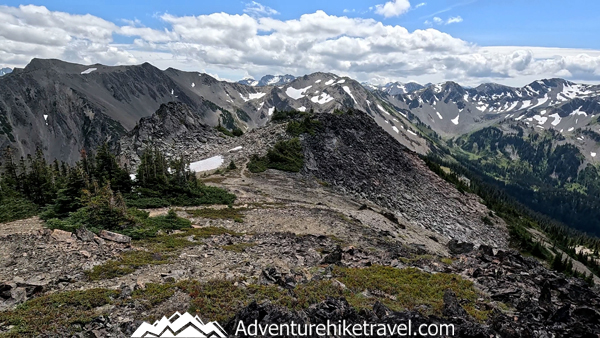
After the initial ridgeline walk, the terrain shifts to more solid, jagged rock with scattered trees. You’ll climb over a few boulders as you make your way down toward Gladys Lake. This section can be a little harder to follow at times, but several cairns help mark the route.
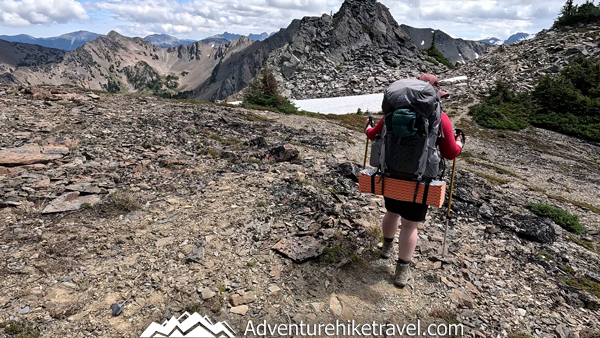
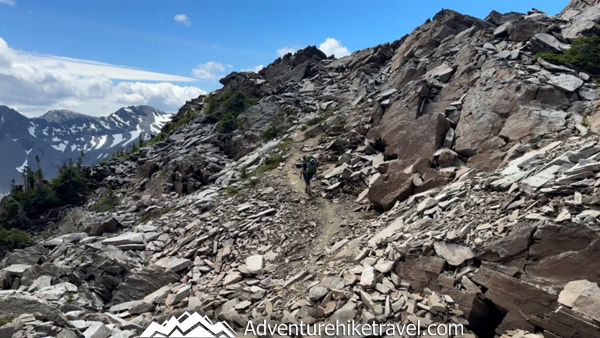
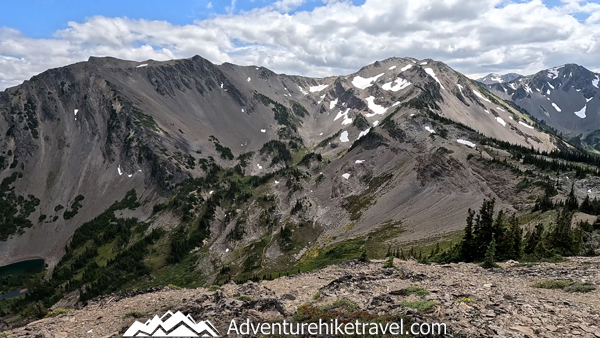
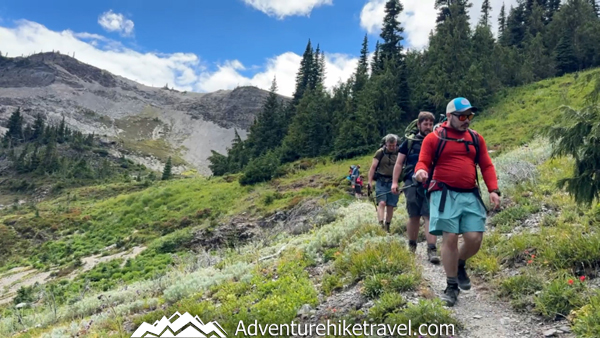
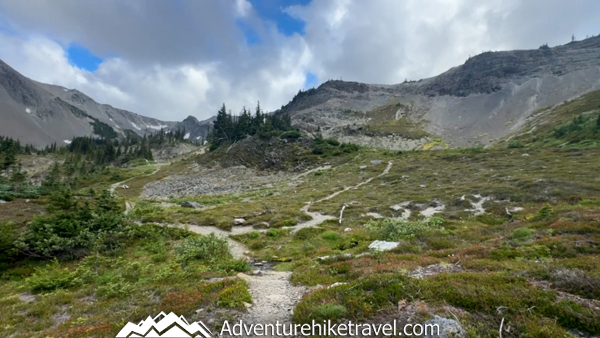
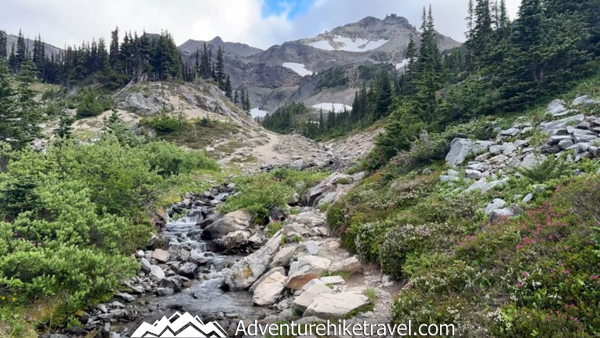
The trail descends 530 feet in a half mile. Once you drop below Lillian Ridge, the rocky landscape completely transforms into a gorgeous alpine meadow.
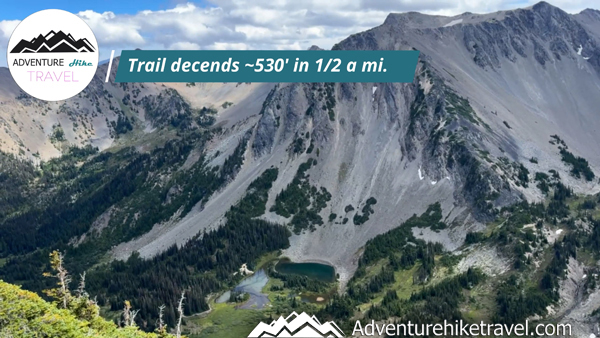
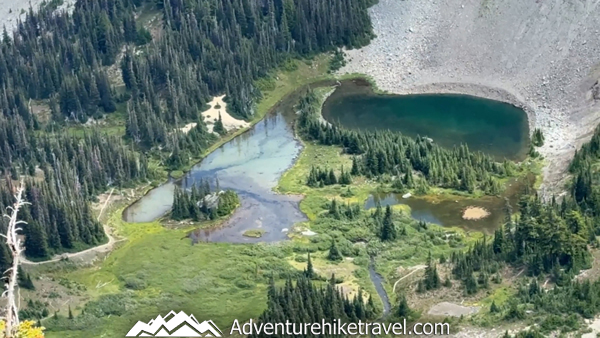
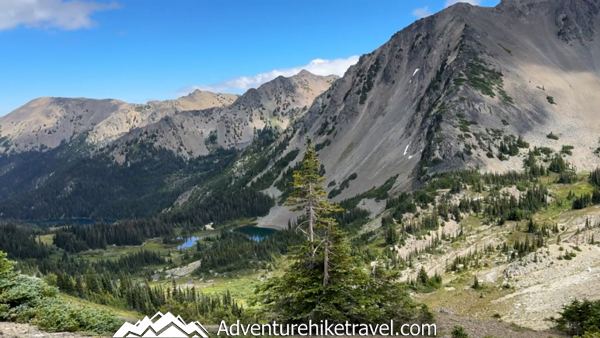
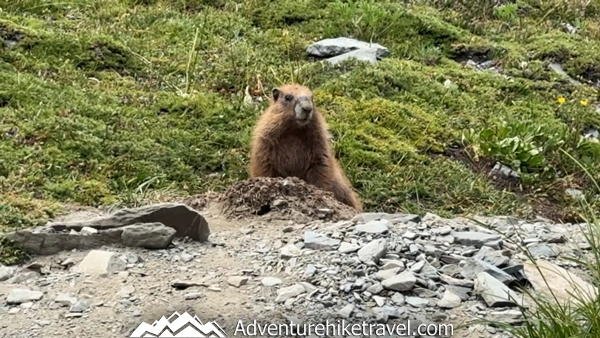
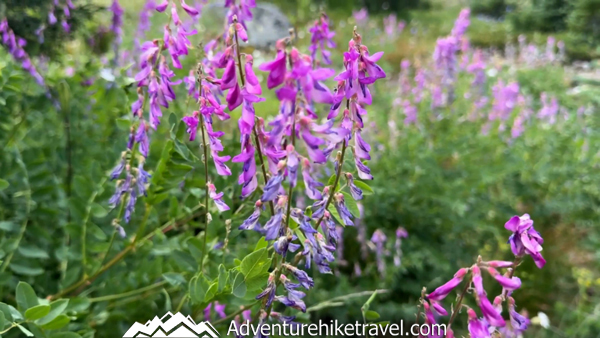
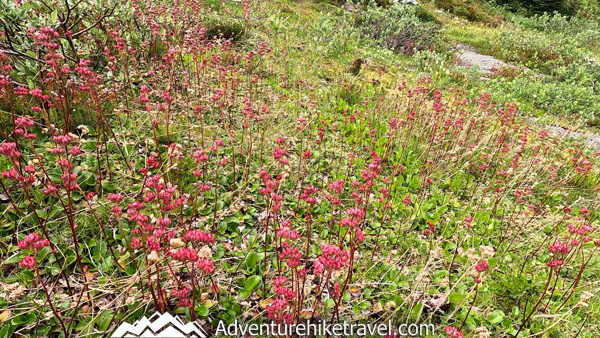
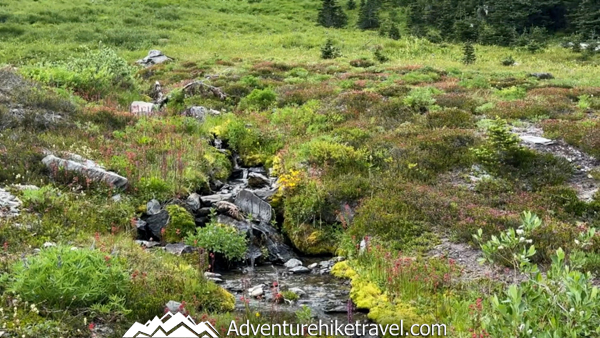
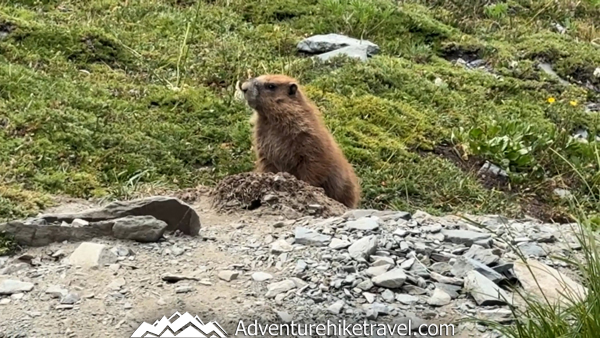
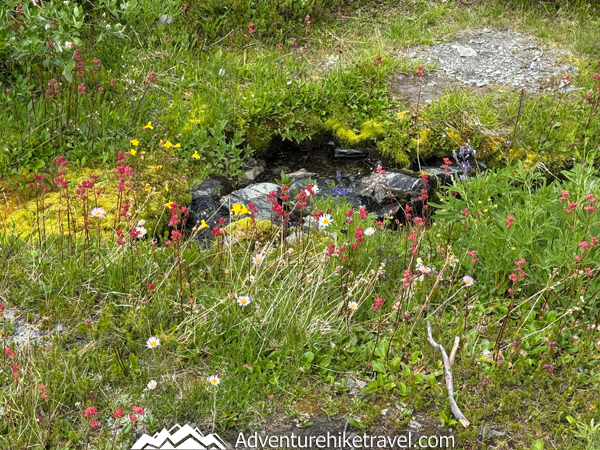
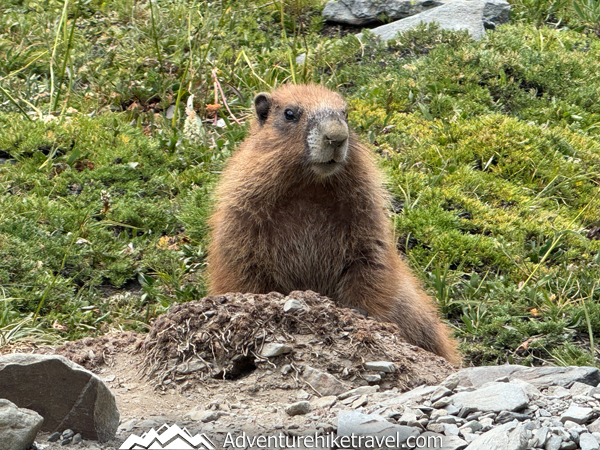
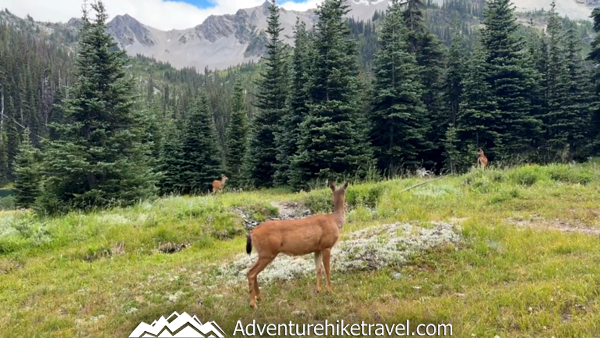
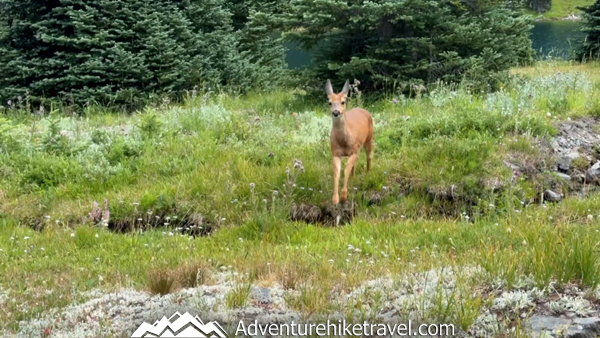
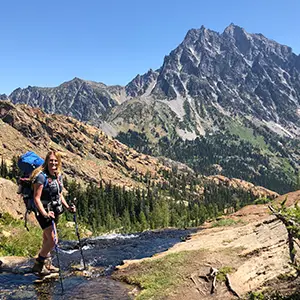
This area was filled with colorful wildflowers, and we saw plenty of deer and Olympic marmots hanging out nearby. A small, babbling stream runs through the meadow, with surrounding peaks rising up all around you — it’s one of those places that naturally makes you slow down. We stopped to take several photos of wildflowers and marmots running in and out of their many burrows.
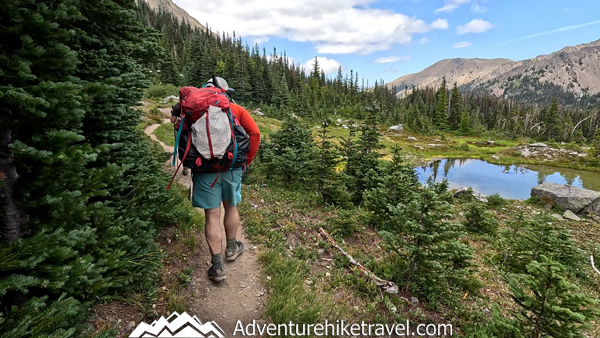
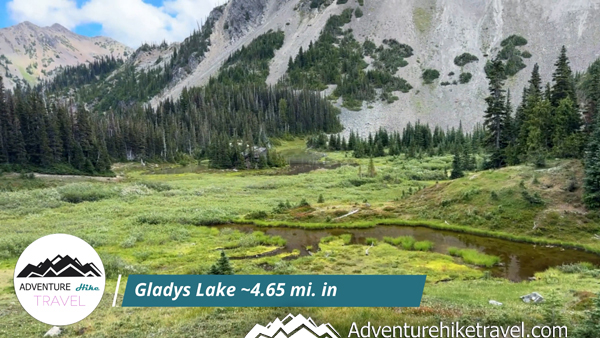
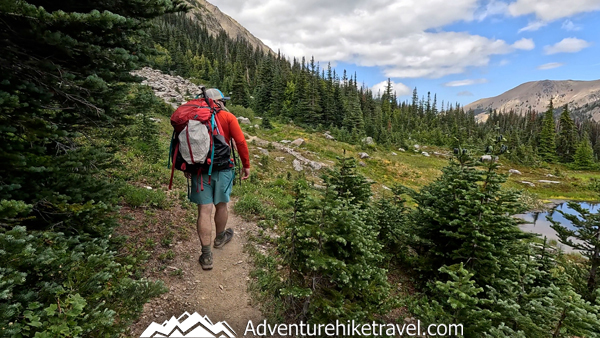
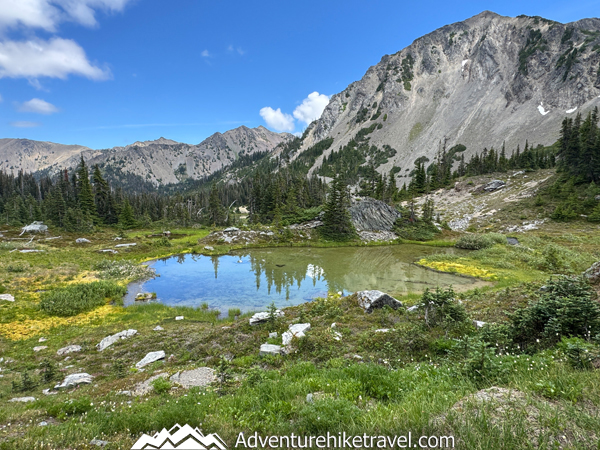
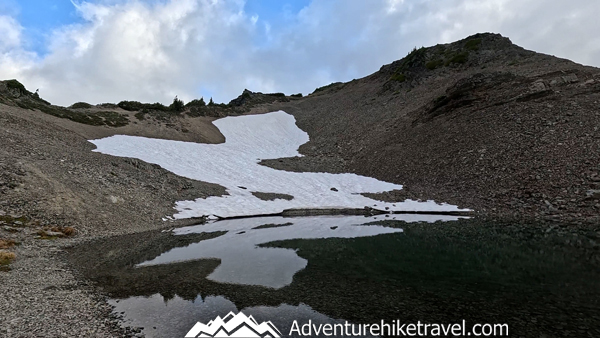
Walking through the meadow at about 4.6 miles into the hike brings you to Gladys Lake, a small, shallow turquoise lake with several campsites nearby. Gladys Lake has enough room for up to 4 different parties up to 10 people, and there is even a bear wire for hanging food.
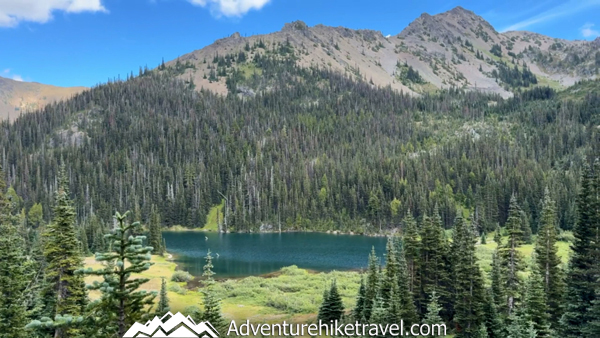
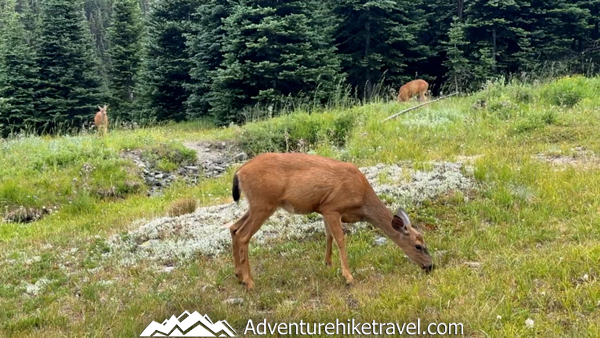
From Gladys Lake, it’s just a short, easy stroll over to Moose Lake. After a long day of climbing and descending, we finally reached the lake at around 5.4 miles. The meadow around Moose Lake is full of wandering deer, and there are about 7 established campsites for backpackers.
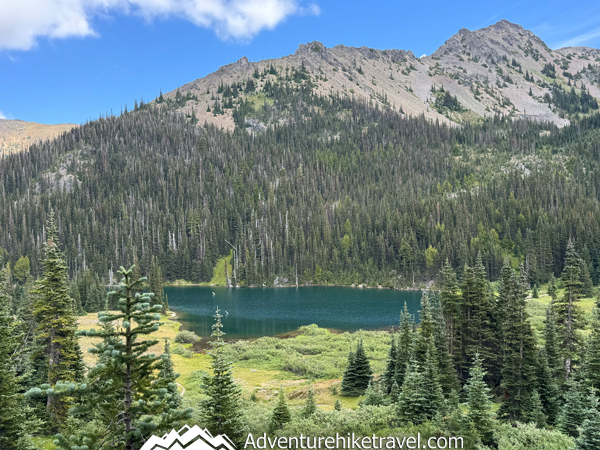
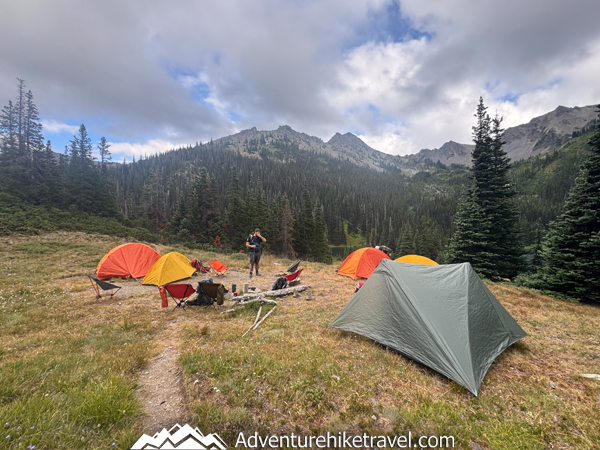
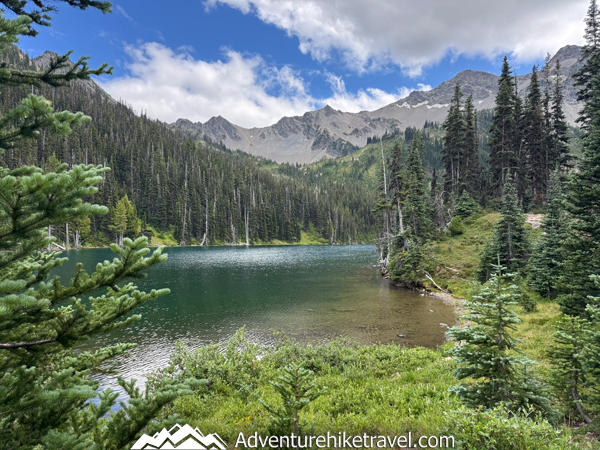
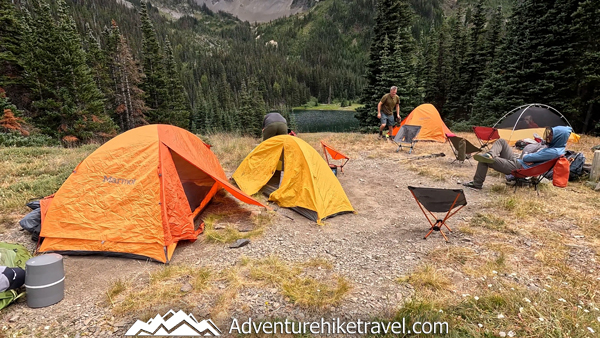
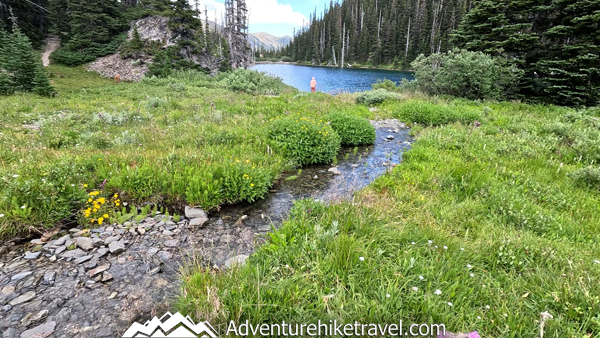
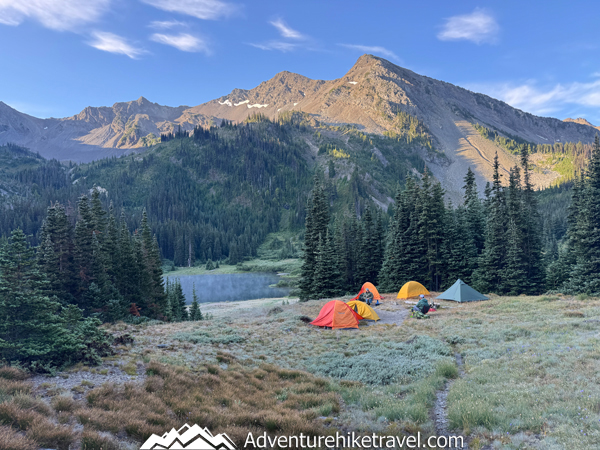
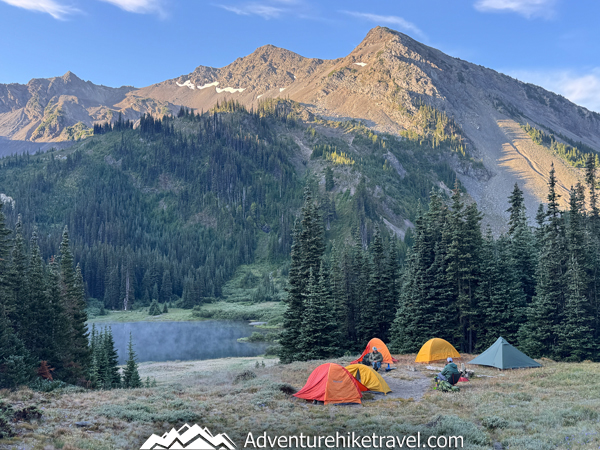
Our group snagged a beautiful spot on the far side of the lake, tucked slightly up the hill. The campsite had a stunning view of the lake, plenty of space for our whole party, and was conveniently close to the open-air pit toilet. On the other side of camp, a small stream flows into Moose Lake — perfect for refilling water bottles and cooking. It was the perfect spot to unwind and soak in the alpine scenery after a long day on the trail.
Day 1 Stats Moose Peak To Moose Lake:
-
Distance: 5.43 mi
-
Ascent: 1,038 ft
-
Descent: 2,145 ft
-
Total Time: 6h 30m (4h 12m moving, 2h 17m stopped)
-
Max Elevation: 6,719 ft at the top of Moose Peak
Side Trip to Grand Pass
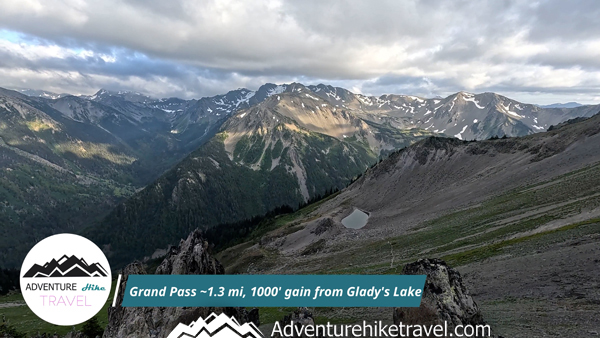
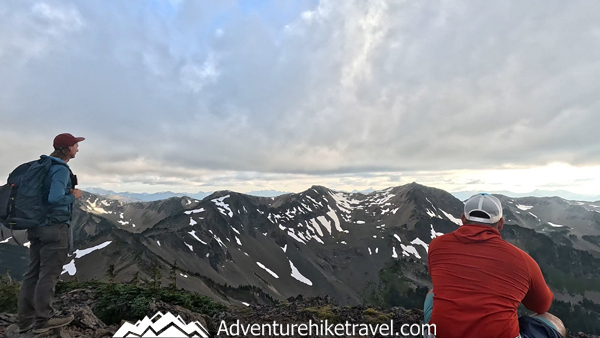
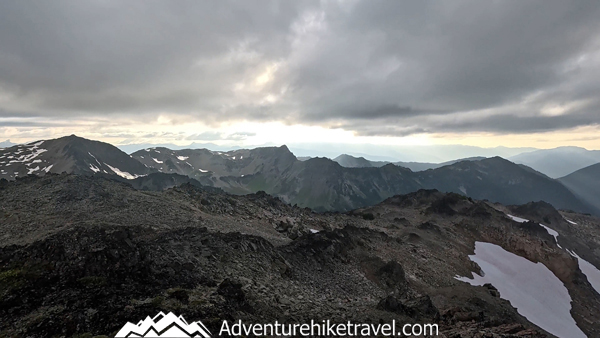
After setting up camp at Moose Lake, about half of our group headed out for a quick side trip to Grand Pass before dusk. From Gladys Lake, it’s roughly 1.3 miles to the pass with about 1,000 feet of elevation gain.
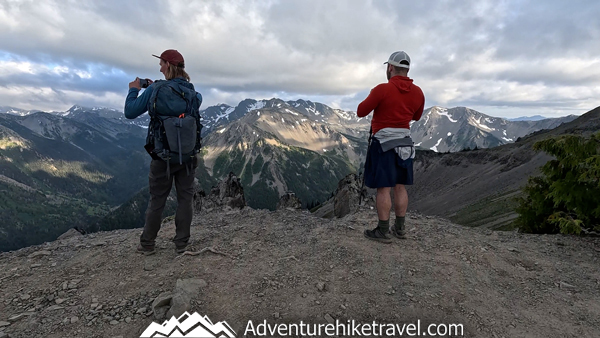
The views from Grand Pass are absolutely stunning, with wide-open alpine scenery in every direction. If you have the time and energy, this side trip is highly recommended — it’s well worth the extra effort and makes an already incredible day even better.
Day 2 – Hiking Out
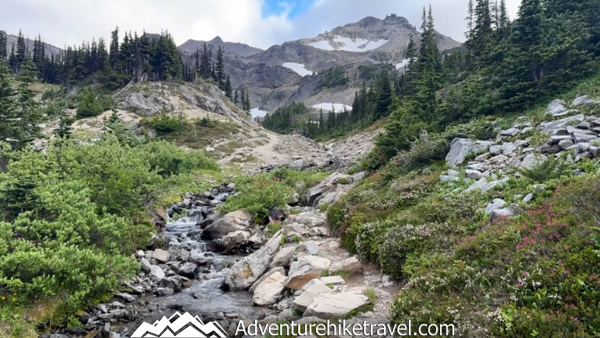
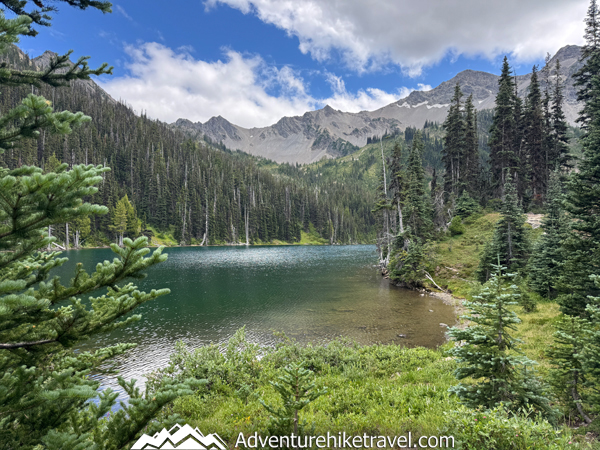
After an overnight at Moose Lake, we began our return on July 27, 2025, at 9:19 AM. The hike out climbs steadily back to the ridge before a long, scenic descent to the trailhead. On the way back, you get fresh perspectives of Grand Lake, the ridges of Lillian Valley, and alpine meadows that were glowing in the morning sunlight.
Day 2 Hike Out Stats:
-
Distance: 4.02 mi
-
Ascent: 1,548 ft
-
Descent: 462 ft
-
Total Time: 2h 22m
-
Max Elevation: 6,427 ft
This second day is shorter but still requires solid hiking fitness, especially for the steady climb out of Moose Lake. The trail is well-marked, but watch your footing.
Permits to Backpack and Camp at Moose Lake in Olympic National Park
If you’re planning to backpack and camp at Moose Lake, you’ll need a wilderness camping permit from Olympic National Park. Moose Lake is located within the Hurricane Ridge Zone, which is a limited-quota area. This means only a set number of campers are allowed each night to help protect the fragile alpine environment.
Permits can be reserved online in advance through Recreation.gov. When booking, search under Olympic National Park Wilderness Permits and select the Hurricane Ridge Zone. Reservations typically open six months in advance, and summer dates—especially weekends—can book up fast, so planning ahead is highly recommended.
When reserving your permit, you’ll need to choose your camp area, list your group size, and select your trip dates. Make sure to print or download your permit before heading out, as there is no cell service once you’re up near Obstruction Point or out on the trail.
If your preferred dates are already full, don’t get discouraged—cancellations do happen. You’ll also have much better luck if you’re flexible or able to go midweek, when permit availability is usually less competitive.
Bear Canisters and Food Storage at Moose Lake
If you’re camping overnight at Moose Lake, you’re required to store all food, toiletries, and scented items in an approved bear canister. This rule applies throughout Olympic National Park and helps protect both wildlife and hikers.
While black bears do live in the area, you’re far more likely to encounter curious deer, marmots, and other critters that are very skilled at getting into unattended food. Proper food storage keeps animals from becoming habituated to humans and helps preserve the natural balance of this high alpine environment.
You can rent bear canisters for free at Olympic National Park ranger stations, including the Wilderness Information Center in Port Angeles. It’s easiest to grab one when you’re picking up or confirming your wilderness permit.
Even if you don’t see any wildlife during your trip, using a bear canister is required and well worth the peace of mind — especially in an area as remote and beautiful as Moose Lake.
Wildlife & Scenery
Along the way, we spotted Olympic marmots, black-tailed deer, and a variety of subalpine birds. Moose Lake is particularly photogenic, reflecting the surrounding craggy peaks in the early morning light. Wildflowers, including lupine and paintbrush, add bursts of color throughout the meadows in mid-summer.
Is There a Toilet at the Obstruction Point Trailhead?
Yes! There is a pit toilet at the Obstruction Point parking lot, which is the main trailhead for hikes heading out along Lillian Ridge toward Moose Peak and Moose Lake. This is your last “real” bathroom before hitting the trail, so it’s a good idea to stop here before starting your hike.
Is There a Toilet at Moose Lake?
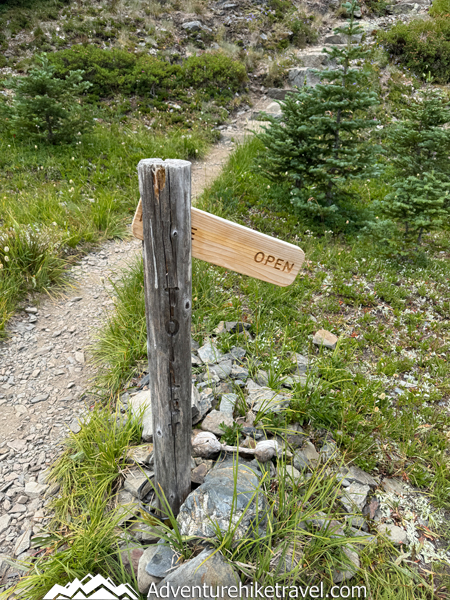
Yes — there is a primitive, open-air pit toilet near Moose Lake. It’s very basic and completely exposed, but it does the job and is conveniently located near the established campsites. As with all backcountry toilets in Olympic National Park, bring your own toilet paper and pack out any trash. This was actually a pretty nice pit toilet as far as backpacking goes; they even had a flip sign to signal whether someone is using it or not, which is nice.
If you’re not comfortable with open-air setups, plan accordingly. And of course, always follow Leave No Trace principles when using backcountry restrooms or if nature calls away from camp.
Can I Have a Campfire at Moose Lake?
Short answer: No.
Moose Lake sits in a high alpine environment within Olympic National Park, and campfires are not allowed here. This area is above the park’s fire-use elevation limit and is considered a sensitive subalpine zone where vegetation recovers very slowly.
These fire restrictions help protect fragile meadows, prevent wildfire risk, and preserve the wilderness feel of the Moose Lake and Lillian Ridge area. Even if you see old fire scars, do not build or use a campfire — regulations are strictly enforced.
If you’re camping at Moose Lake, plan to cook with a backpacking stove only and pack out all trash. You’ll also need to store all food and scented items in an approved bear canister, which is required in this area.
Following these rules helps keep Moose Lake beautiful, wild, and open to backpackers for years to come.
Can I Bring My Dog to Moose Lake?
Short answer: No.
Moose Lake and Moose Peak are located within Olympic National Park, and dogs are not allowed on the trails or in the backcountry here. This includes the entire route from Obstruction Point along Lillian Ridge, Moose Peak, Gladys Lake, and Moose Lake.
This rule is in place to protect the fragile alpine meadows, wildlife, and overall wilderness experience. Even well-behaved dogs can disturb wildlife like deer and Olympic marmots, damage sensitive vegetation, and leave waste in areas that take years to recover.
If you’re planning a backpacking trip to Moose Lake, you’ll need to make arrangements for your pup at home or choose a dog-friendly trail outside Olympic National Park instead.
Following these rules helps keep Moose Lake wild, beautiful, and protected for future hikers.

My Recommended Stop for Food & Coffee on the Way to Moose Lake
If you’re heading to Obstruction Point for a Moose Lake and Moose Peak backpacking trip, I highly recommend stopping at Longhouse Market & Deli in Sequim for breakfast and trail snacks. It’s right off Highway 101, making it an easy, no-stress stop before you start the drive up to Hurricane Ridge.
They usually have hot, ready-to-go breakfast sandwiches and wraps in the morning, which is perfect when you’re trying to get an early start. You can also grab a made-to-order sandwich to pack for lunch or dinner on the trail. My go-to is still their bacon, egg, and cheese breakfast wrap—filling, tasty, and exactly what you want before a big alpine climb.
They’ve also got coffee, snacks, drinks, and last-minute essentials, making it a solid one-stop shop before heading into Olympic National Park. If you’re starting early and want something quick and reliable, this spot is hard to beat.
Longhouse Market & Deli
271020 Highway 101, Sequim, WA 98382
📞 Phone: 360-681-7777
Best Time to Hike Moose Lake and Moose Peak
Most years, Moose Lake and Moose Peak are best hiked from mid-July through late September, once the Obstruction Point Road opens and snow melts off the high ridgelines. Because the trailhead starts above 6,000 feet, snow can linger well into early summer, especially along Lillian Ridge and on the scree slopes up Moose Peak.
July and August are prime time for this hike, with long daylight hours, blooming wildflowers, and generally stable weather. This is also when you’re most likely to see deer and Olympic marmots hanging out in the alpine meadows. Keep in mind that mosquitoes can be intense around Moose Lake and Gladys Lake during peak summer.
For fall colors and fewer crowds, late September can be an incredible time to visit, especially on clear days when the air is crisp and views of Mount Olympus and the Bailey Range really pop. Nights get cold fast at this elevation, and early snowstorms are possible, so be prepared for changing conditions.
Overnight camping in this area requires a wilderness permit for the Hurricane Ridge Zone during the main season, typically May 1 through September 30. Outside of that window, permits may not be required, but road access and snow conditions often limit travel. Always check current conditions and weather forecasts before heading into this high-alpine terrain.
Quick Tips for Moose Lake & Moose Peak
-
Pass & Permits: America the Beautiful Pass required for parking; backcountry permit needed for overnight camping.
-
Dogs: Not allowed on the trails.
-
Water: Carry plenty or filter from Moose Lake.
-
Navigation: Download maps ahead of time—cell service is spotty along Lillian Ridge.
-
Gear: Trekking poles help on scree slopes; layers are essential due to changing alpine weather.
-
Timing: Start early to give yourself plenty of daylight.
Getting to the Moose Lake Trailhead (Obstruction Point Road) from Seattle
From Seattle, it’s about a 2.5–3 hour drive to the start of your Moose Lake adventure, depending on traffic and ferry schedules if you’re coming from the east side of the Sound. Here’s how to get there:
-
Head west on I-5 toward Olympia, then follow US-101 North toward Port Angeles. The drive takes you along some gorgeous forested stretches and past the Strait of Juan de Fuca, so keep your camera handy!
-
Once you reach Port Angeles, follow signs for Hurricane Ridge Road. You’ll turn off US-101 onto Race Street (or a similar connector road depending on your GPS), and continue up past the Olympic National Park Visitor Center. This is a good spot to grab maps, check trail conditions, or ask the rangers any last-minute questions.
-
Continue up Hurricane Ridge Road for roughly 17–18 miles. Just before the large parking area at Hurricane Ridge, keep an eye out for Obstruction Point Road on your right.
-
Take Obstruction Point Road — a narrow, gravel road — almost a hairpin turn off a cliff on your left. The road is definitely steep. Follow Obstruction Point Road about 8 miles all the way to the end. This is the Moose Lake trailhead. The road is a little bumpy in spots, so go slow and enjoy the views!
Tip: Parking at the end of Obstruction Point Road is limited, especially on weekends and during summer. Arriving early is key if you want a spot and to get a head start on your hike.
Final Thoughts
Moose Lake & Moose Peak totally blew me away. From the moment we started on Lillian Ridge, the views just kept getting better and better. Ridgelines as far as you can see, jagged peaks in every direction, and valleys that make you stop and just stare. The scramble up Moose Peak definitely makes you feel your legs, but the summit views are 100% worth every calf-burning step.
Descending into the meadows felt like stepping into another world — wildflowers everywhere, deer grazing nearby, and Olympic marmots popping their heads out to say hello. And then there’s Moose Lake itself… the water is this gorgeous turquoise color perfectly framed by the surrounding peaks. I could have spent hours just sitting there, taking it all in. Next time, I would love to plan to have more time at the lake.
This hike has a little bit of everything: ridge scrambles, peaceful alpine meadows, wildlife, crystal-clear lakes, and jaw-dropping summit views. It’s challenging, yes, but it’s also one of those hikes that makes you feel alive and reminds you why Olympic National Park is so special. If you love backcountry adventures, ridge walking, and epic photography opportunities, Moose Lake & Moose Peak should definitely be on your bucket list.
Want To Fill Your Life With Adventure?
Join our newsletter for an adrenaline-fueled journey! Receive exclusive updates on travel tips, gear reviews, epic hikes, captivating stories, and inspiration to turn your dreams into reality.
Don't just dream it, live it! Get Out There!